
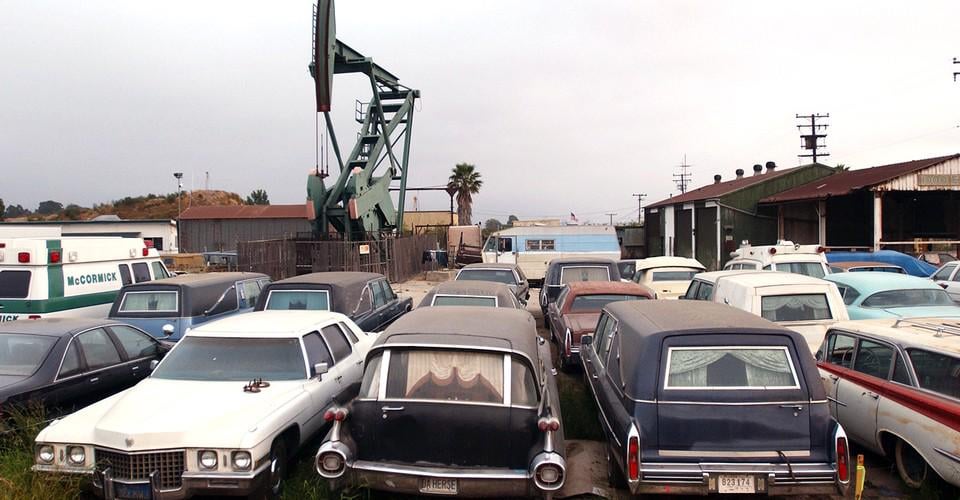
A century ago, LA was one of the world’s biggest oil producers. Pumpjacks dotted the skyline, and crude money fueled the city’s rise.
That legacy didn’t disappear — it went underground.
Today, hundreds of abandoned, idle, and marginal wells lie beneath homes, schools, and parks across Los Angeles. In neighborhoods like Wilmington, Inglewood, and Baldwin Hills, some wells sit just meters from people’s front doors.
The problem:
- Many wells were never properly sealed
- Monitoring is patchy — sometimes nonexistent
- Methane, 82× more potent than CO₂, seeps invisibly into the air
California’s regulator, CalGEM, has tough plugging rules on paper, and new federal funds are starting to flow for cleanup. But the scale is daunting — thousands of sites remain undocumented or orphaned, and there’s little data on how much methane they’re actually emitting.
Los Angeles is just the most visible case of a national issue: cities built on the remains of old energy booms are now facing their invisible climate and health costs. The Urban Oil Fields of Los Angeles
Pump-jacks in the parking lot of Curley's Cafe, Signal Hill, California. #© Google, Inc.
Source: KajEmbrenOfficial