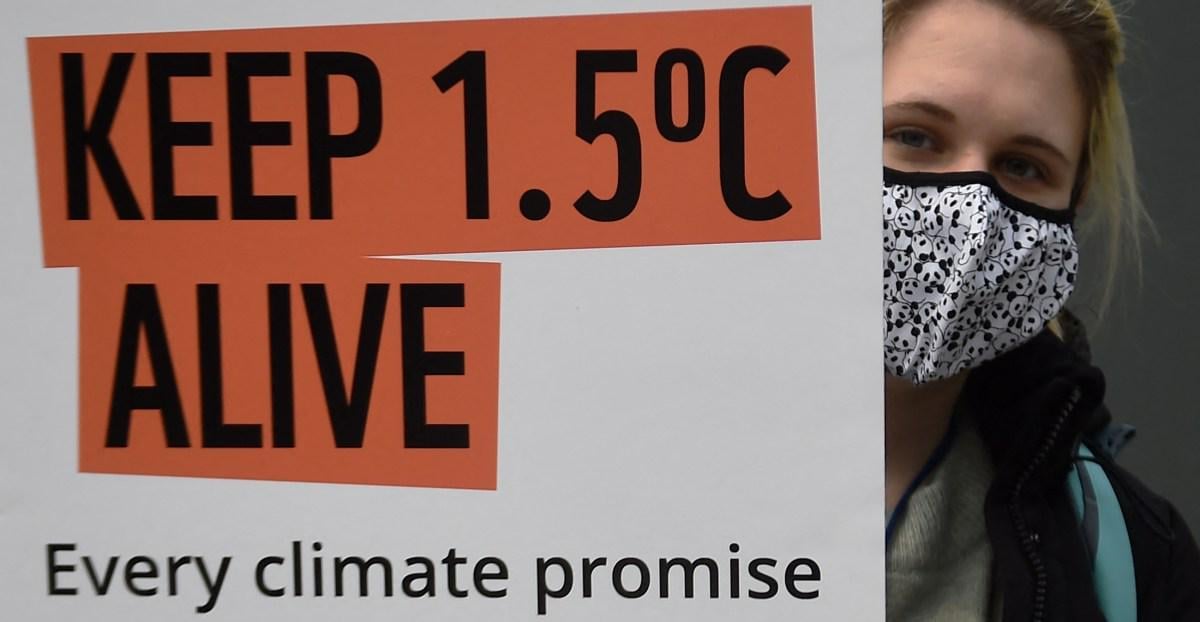
For the last decade, global climate politics have revolved around a single number: 1.5 degrees Celsius.
The idea was that keeping the planet below this warming threshold would hold many of the worst impacts of climate change in a manageable range. Cross it, and the risks rise sharply into uncharted territory.
This year, it became clearer than ever that we will cross it.
“Scientists tell us that a temporary overshoot above 1.5 degrees [Celsius] is now inevitable,” UN Secretary-General António Guterres said in November. “And the path to a livable future gets steeper by the day.”
Under the 2015 Paris climate agreement, countries agreed to limit the increase in global average temperatures this century to “well below” 3.6 degrees Fahrenheit (2 degrees Celsius) compared to the start of the industrial revolution. The goalpost for national commitments to cutting emissions of heat-trapping gases was [1.5 degrees C — or 2.7 degrees Fahrenheit](https://www.un.org/en/climatechange/science/climate-issues/degrees-matter).
In 2018, the Intergovernmental Panel on Climate Change, a team of climate change researchers convened by the United Nations, examined the differences between the two benchmarks and concluded that every bit of warming is consequential, and that in general, [the hotter it gets, the worse it gets](https://www.vox.com/2018/10/5/17934174/climate-change-global-warming-un-ipcc-report-1-5-degrees) for humanity. Higher average temperatures will lead to more extreme heat waves, higher sea levels, worse droughts in some areas, and more severe floods in others.
However, last month, the [UN Environment Programme estimated](https://wedocs.unep.org/items/9f0bf855-2069-42a6-a856-4b389f740c5c) that the world will overshoot 2.7 degrees Fahrenheit of warming in the next decade based on current trends. To get back on track, global greenhouse gas emissions would have to fall by more than half from current levels in that timeframe, an exceedingly unlikely prospect. The United States, the world’s largest historical emitter of greenhouse gases, is backing away from its climate commitments and actively increasing its extraction of fossil fuels.
With the window closed on staying below 1.5°C, what happens now?

1 Comment
For the last decade, global climate politics have revolved around a single number: 1.5 degrees Celsius.
The idea was that keeping the planet below this warming threshold would hold many of the worst impacts of climate change in a manageable range. Cross it, and the risks rise sharply into uncharted territory.
This year, it became clearer than ever that we will cross it.
Climate scientists have been [warning for years](https://www.vox.com/22620706/climate-change-ipcc-report-2021-ssp-scenario-future-warming) that we’ve already backed ourselves into a corner where even the most optimistic forecasts of humanity’s efforts to address climate change will breach this threshold. Now this year, even some of the loudest voices calling for global action to curb emissions have begun to [drop the pretense](https://www.bigissue.com/news/environment/los-angeles-fires-global-warming-climate-change/).
“Scientists tell us that a temporary overshoot above 1.5 degrees [Celsius] is now inevitable,” UN Secretary-General António Guterres said in November. “And the path to a livable future gets steeper by the day.”
Under the 2015 Paris climate agreement, countries agreed to limit the increase in global average temperatures this century to “well below” 3.6 degrees Fahrenheit (2 degrees Celsius) compared to the start of the industrial revolution. The goalpost for national commitments to cutting emissions of heat-trapping gases was [1.5 degrees C — or 2.7 degrees Fahrenheit](https://www.un.org/en/climatechange/science/climate-issues/degrees-matter).
In 2018, the Intergovernmental Panel on Climate Change, a team of climate change researchers convened by the United Nations, examined the differences between the two benchmarks and concluded that every bit of warming is consequential, and that in general, [the hotter it gets, the worse it gets](https://www.vox.com/2018/10/5/17934174/climate-change-global-warming-un-ipcc-report-1-5-degrees) for humanity. Higher average temperatures will lead to more extreme heat waves, higher sea levels, worse droughts in some areas, and more severe floods in others.
However, last month, the [UN Environment Programme estimated](https://wedocs.unep.org/items/9f0bf855-2069-42a6-a856-4b389f740c5c) that the world will overshoot 2.7 degrees Fahrenheit of warming in the next decade based on current trends. To get back on track, global greenhouse gas emissions would have to fall by more than half from current levels in that timeframe, an exceedingly unlikely prospect. The United States, the world’s largest historical emitter of greenhouse gases, is backing away from its climate commitments and actively increasing its extraction of fossil fuels.
With the window closed on staying below 1.5°C, what happens now?