Question time allocations, staffing resources, the chamber seating plan and bipartisan committee positions are all in flux – though the government has not been rushing to finalise changes in case the former Coalition party leaders change their minds and reunify. When approached for comment on what the split means for the House of Representatives’ operations, Minister for Home Affairs Tony Burke couldn’t resist a quip. “It never occurred to me when Barnaby [Joyce] went to join the crossbench that the entire National Party would move to the crossbench with him,” he said. “The crossbench is now as big as the opposition. We are still working out what that will mean. But it’s a big shift.”
The opposition split doubles the size of the crossbench from 14 to 28 people – [equal to the number of Liberal MPs](https://www.smh.com.au/politics/federal/the-coalition-has-split-again-how-did-we-get-here-20260122-p5nw34.html) – and will necessitate changes in the chamber, where the Liberals and Nationals have sat together for decades. Party whips have been discussing new seating arrangements. A senior government source, who asked not to be named so they could speak freely, said the seating plan had not yet been finalised, but “at this stage the Nationals will be joining the crossbench”.
A draft plan is expected to propose that Liberal assistant shadow ministers move down to fill the gaps on the frontbench left by departing Nationals, and the handful of remaining Liberal backbenchers move in behind them. Littleproud and his deputy, Kevin Hogan, are expected to take the seats of Nationals backbenchers Jamie Chaffey and Andrew Willcox, behind the opposition frontbench. Senior Nationals would then fan out behind them and occupy the back row of the chamber vacated by the Liberals. It will be another fundamental shift in the chamber’s look and feel after the government’s thumping election win last May, when [Labor MPs spilled over onto seats historically inhabited by the crossbench](https://www.smh.com.au/politics/federal/question-time-returns-but-you-wouldn-t-want-to-look-here-for-answers-20250723-p5mh8o.html). The seating was not rearranged when the Coalition briefly split less than a year ago because parliament did not sit during the eight days the Liberals and Nationals spent apart.

1 Comment
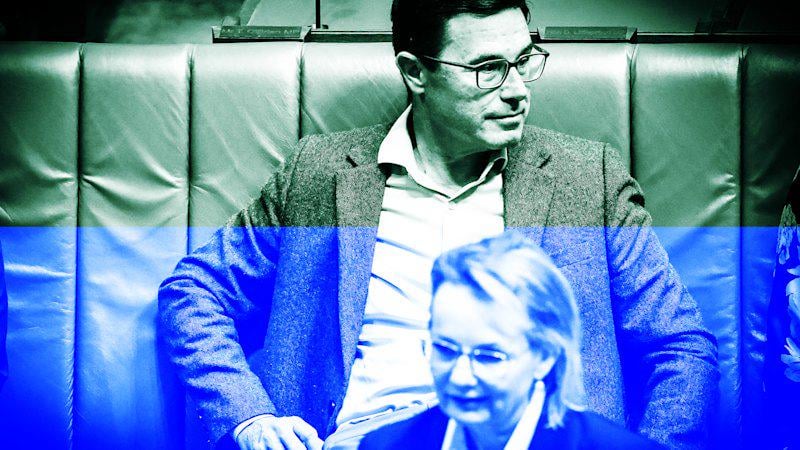
Nationals leader David Littleproud’s [apparent attempt to spur Liberals](https://www.smh.com.au/politics/federal/amid-coalition-chaos-this-nationals-leader-has-little-to-be-proud-of-20260128-p5nxq2.html) into ousting their leader by blowing up the Coalition partnership [is yet to bear fruit](https://www.theage.com.au/politics/federal/ley-gives-littleproud-one-week-ultimatum-to-reform-coalition-20260130-p5nyag.html). Instead, the Nationals have been relegated to minor party status, and Littleproud and his senior MPs have relinquished their prime positions on the shadow frontbench. With the Liberals becoming the sole party of opposition and the Nationals joining the crossbench after Littleproud and Opposition Leader Sussan Ley [could not reconcile their differences](https://www.smh.com.au/politics/federal/it-s-done-nationals-leave-the-coalition-say-ley-put-them-in-untenable-position-20260122-p5nw27.html), enduring conventions will need to change when parliament returns from the summer recess on Monday.
Question time allocations, staffing resources, the chamber seating plan and bipartisan committee positions are all in flux – though the government has not been rushing to finalise changes in case the former Coalition party leaders change their minds and reunify. When approached for comment on what the split means for the House of Representatives’ operations, Minister for Home Affairs Tony Burke couldn’t resist a quip. “It never occurred to me when Barnaby [Joyce] went to join the crossbench that the entire National Party would move to the crossbench with him,” he said. “The crossbench is now as big as the opposition. We are still working out what that will mean. But it’s a big shift.”
The opposition split doubles the size of the crossbench from 14 to 28 people – [equal to the number of Liberal MPs](https://www.smh.com.au/politics/federal/the-coalition-has-split-again-how-did-we-get-here-20260122-p5nw34.html) – and will necessitate changes in the chamber, where the Liberals and Nationals have sat together for decades. Party whips have been discussing new seating arrangements. A senior government source, who asked not to be named so they could speak freely, said the seating plan had not yet been finalised, but “at this stage the Nationals will be joining the crossbench”.
A draft plan is expected to propose that Liberal assistant shadow ministers move down to fill the gaps on the frontbench left by departing Nationals, and the handful of remaining Liberal backbenchers move in behind them. Littleproud and his deputy, Kevin Hogan, are expected to take the seats of Nationals backbenchers Jamie Chaffey and Andrew Willcox, behind the opposition frontbench. Senior Nationals would then fan out behind them and occupy the back row of the chamber vacated by the Liberals. It will be another fundamental shift in the chamber’s look and feel after the government’s thumping election win last May, when [Labor MPs spilled over onto seats historically inhabited by the crossbench](https://www.smh.com.au/politics/federal/question-time-returns-but-you-wouldn-t-want-to-look-here-for-answers-20250723-p5mh8o.html). The seating was not rearranged when the Coalition briefly split less than a year ago because parliament did not sit during the eight days the Liberals and Nationals spent apart.