In an interview with The Saturday Paper, the leader of the Australian Greens outlines her vision for the party as a ‘happy outcome’ of the split between the Liberal and National parties. By Karen Barlow.
In the collapse of the Coalition, the Greens see opportunity. Ahead of parliament’s return, they are positioning themselves as the party of progressive reform and stability – a natural balance to Labor and an ally in passing legislation.
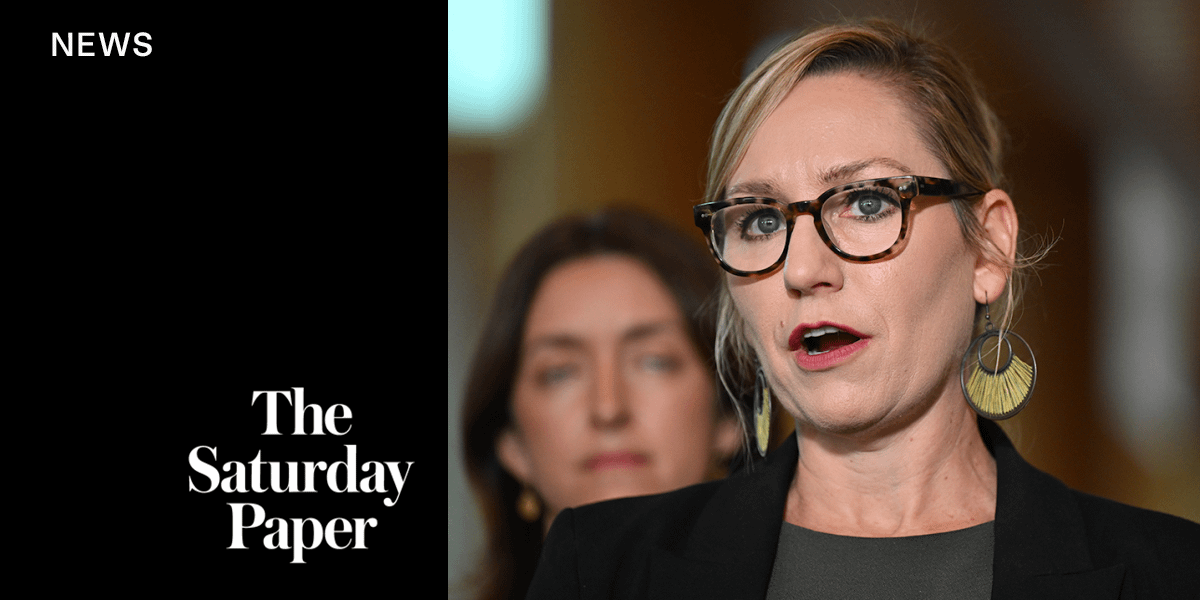
“Perhaps a happy outcome of the Coalition’s meltdown might be that the government sees that the Greens can get shit done, but it’s got to be shit that actually helps people and helps the planet,” the party’s leader, Larissa Waters, tells The Saturday Paper.
“I think it’s very unedifying that in a summer of climate crises, where cost of living and the housing crisis continues to be at the front of people’s minds, the Coalition, rather than focusing on those things, are just focused on themselves.”
Waters is calling on the prime minister – who has had a long-running and well-documented animosity to the party – to use this moment as an opportunity to break free from the major party status quo.
Waters, who took over the Greens leadership after Adam Bandt lost his House seat in the last election, says that while “the Coalition are in meltdown, the Greens are here”.
“We’re a party that knows what we stand for. Our key policies and principles, we know what they are. They don’t change. We listen to evidence,” says Waters, a former environmental lawyer.
“If they had the courage and the vision to actually fix the system for ordinary people and protect nature, then there’s the numbers with the Greens in the parliament to do that.”
Progressive deal-making is “largely” there early in the Albanese government’s second term, according to a senior government insider.
Analysis by The Saturday Paper shows that of the 50 pieces of government legislation passed into law before the December 14 anti-Semitic Bondi terrorist attack, only six were passed with the explicit support of the Coalition. The rest were passed either on the voices or with explicit Greens support.
“Our pathway to getting things done has largely, not exclusively, been with the Greens and the progressive side of the parliament,” the government insider tells The Saturday Paper.
“It is not from us not talking to the Coalition and trying to work constructively with them.
“We definitely still engage with them as the logical other party of government. But if they, which they have done for some time, deal themselves out, either on a technicality or because of their internals, then, of course, we’re going to look for a different pathway.”
Prime Minister Anthony Albanese addressed the challenge in a January 16 press conference, as he tried to get Senate support for his attempt to bundle responsive hate speech laws with tougher gun reform, including a national gun buyback scheme.
The Labor leader pointed out that he particularly wanted to work with the “parties of government” – that is, the Coalition – but he was frustrated.
“This is like trying to grab smoke, trying to get an arrangement with the Coalition,” Albanese told reporters.
“How do you do it? They sat back last year and didn’t engage at all on environmental laws. Those environmental laws passed the parliament. We’re engaging constructively.”
The comments were telling.
“It does indicate that the government would prefer to work with the Coalition. That is always their first port of call,” Waters says.
“That’s because they’re both status quo parties, and they’re both accepting political donations from the same big companies, often the big polluters, and they’re both not wanting to actually change the system, because the system is working quite nicely for them and the people that donate to them, namely the big corporations and the very wealthy.
“I think it’s pretty clear that the government does prefer to do things in a ‘bipartisan’ manner.”
Preference and reality are two different things.
“Honesty is important to me, and I like to not bullshit people, and to be frank. Kind but frank.”
“I feel like the relationship is… it’s working. We’re getting results where we can,” Waters says.
“There’s a lot of lack of vision to actually tackle the real cause of the problems people are facing, but we have to just keep on trying.”
Critics question what the Greens have achieved in return for legislative support in the Senate, however.
The party secured stronger environmental protections while negotiating the overhaul of the outdated Environment Protection Biodiversity and Conservation Act, including removing fast-track approvals for coal and gas projects and mandating an end to exemptions for native forest logging within 18 months.
However, questions remain over the standards underpinning the Act and whether they will do enough to protect the environment.
The imminent drafting of the standards will be a test for the Greens.
The Greens were seen as not making big demands in return for gun reform in the wake of the attack.
“The Greens are terrible negotiators,” a crossbench source tells The Saturday Paper. “They have more power this term and they could have got more out of Labor, particularly over ammunition.
“Ammo could have been included in the gun buyback. Instead, they waived through the firearms reform.”
After stalled negotiations with the Coalition, Albanese split the omnibus bill to secure passage of part of the reforms during this month’s early return of parliament.
HotPersimessage62 on
The Greens will continue to work with the centre-right, right and far-right, not Labor.
In just the past 12 months we’ve seen the Greens support a Liberal government in Tasmania, vote against legislation that would ban far-right neo-Nazi groups and the far-right Hizb-ut-Tahrir (and openly defend those groups’ right to exist and operate), and of course try to topple a progressive Labor government and form government with one of the most conservative Liberal party branches and the country – that plan is still on hold. And let’s not forget the Greens either supporting or openly marching alongside the far-right at the divisive rallies every weekend for two years.
Appropriate_Volume on
Waters does seem to be much more constructive than Adam Bandt. It’s been good to see the Greens dial down their rhetoric and reduce the use of confrontational tactics since the election. It suggests that they’ve learned some lessons.
The ALP prefers to deal with the Coalition for a couple of reasons. Firstly, Albanese regularly stresses that he wants reforms that stick for the long term, and bipartisan support is often necessary for this. Secondly, much of the ALP hates the Greens more than they hate the Coalition, including as the Greens have historically been a threat to some safe ALP House of Representatives seats, so they don’t want to give them many wins. It’s also sensible tactics for managing the senate to negotiate with both the Coalition and the Greens, as this allows the government to play the parties off against each other and gives them two possible pathways for passing legislation.
123chuckaway on
Greens in discussions with Labor that could strengthen the delivery and outcomes for both parties?
I’m sure that one poster will undoubtedly post 600 links in every Australian subreddit about it for 2 weeks, just like they did about ACT Greens and Canberra Liberals having discussions.
hildred123 on
I mean she’s not wrong. We’ve seen in this term that Labor sided with the Greens on environmental reform once Ley backed off committing to net zero due to pressure from the right of the liberals and the nationals

5 Comments
In an interview with The Saturday Paper, the leader of the Australian Greens outlines her vision for the party as a ‘happy outcome’ of the split between the Liberal and National parties. By Karen Barlow.
In the collapse of the Coalition, the Greens see opportunity. Ahead of parliament’s return, they are positioning themselves as the party of progressive reform and stability – a natural balance to Labor and an ally in passing legislation.
“Perhaps a happy outcome of the Coalition’s meltdown might be that the government sees that the Greens can get shit done, but it’s got to be shit that actually helps people and helps the planet,” the party’s leader, Larissa Waters, tells The Saturday Paper.
“I think it’s very unedifying that in a summer of climate crises, where cost of living and the housing crisis continues to be at the front of people’s minds, the Coalition, rather than focusing on those things, are just focused on themselves.”
Waters is calling on the prime minister – who has had a long-running and well-documented animosity to the party – to use this moment as an opportunity to break free from the major party status quo.
Waters, who took over the Greens leadership after Adam Bandt lost his House seat in the last election, says that while “the Coalition are in meltdown, the Greens are here”.
“We’re a party that knows what we stand for. Our key policies and principles, we know what they are. They don’t change. We listen to evidence,” says Waters, a former environmental lawyer.
“If they had the courage and the vision to actually fix the system for ordinary people and protect nature, then there’s the numbers with the Greens in the parliament to do that.”
Progressive deal-making is “largely” there early in the Albanese government’s second term, according to a senior government insider.
Analysis by The Saturday Paper shows that of the 50 pieces of government legislation passed into law before the December 14 anti-Semitic Bondi terrorist attack, only six were passed with the explicit support of the Coalition. The rest were passed either on the voices or with explicit Greens support.
“Our pathway to getting things done has largely, not exclusively, been with the Greens and the progressive side of the parliament,” the government insider tells The Saturday Paper.
“It is not from us not talking to the Coalition and trying to work constructively with them.
“We definitely still engage with them as the logical other party of government. But if they, which they have done for some time, deal themselves out, either on a technicality or because of their internals, then, of course, we’re going to look for a different pathway.”
Prime Minister Anthony Albanese addressed the challenge in a January 16 press conference, as he tried to get Senate support for his attempt to bundle responsive hate speech laws with tougher gun reform, including a national gun buyback scheme.
The Labor leader pointed out that he particularly wanted to work with the “parties of government” – that is, the Coalition – but he was frustrated.
“This is like trying to grab smoke, trying to get an arrangement with the Coalition,” Albanese told reporters.
“How do you do it? They sat back last year and didn’t engage at all on environmental laws. Those environmental laws passed the parliament. We’re engaging constructively.”
The comments were telling.
“It does indicate that the government would prefer to work with the Coalition. That is always their first port of call,” Waters says.
“That’s because they’re both status quo parties, and they’re both accepting political donations from the same big companies, often the big polluters, and they’re both not wanting to actually change the system, because the system is working quite nicely for them and the people that donate to them, namely the big corporations and the very wealthy.
“I think it’s pretty clear that the government does prefer to do things in a ‘bipartisan’ manner.”
Preference and reality are two different things.
“Honesty is important to me, and I like to not bullshit people, and to be frank. Kind but frank.”
“I feel like the relationship is… it’s working. We’re getting results where we can,” Waters says.
“There’s a lot of lack of vision to actually tackle the real cause of the problems people are facing, but we have to just keep on trying.”
Critics question what the Greens have achieved in return for legislative support in the Senate, however.
The party secured stronger environmental protections while negotiating the overhaul of the outdated Environment Protection Biodiversity and Conservation Act, including removing fast-track approvals for coal and gas projects and mandating an end to exemptions for native forest logging within 18 months.
However, questions remain over the standards underpinning the Act and whether they will do enough to protect the environment.
The imminent drafting of the standards will be a test for the Greens.
The Greens were seen as not making big demands in return for gun reform in the wake of the attack.
“The Greens are terrible negotiators,” a crossbench source tells The Saturday Paper. “They have more power this term and they could have got more out of Labor, particularly over ammunition.
“Ammo could have been included in the gun buyback. Instead, they waived through the firearms reform.”
After stalled negotiations with the Coalition, Albanese split the omnibus bill to secure passage of part of the reforms during this month’s early return of parliament.
The Greens will continue to work with the centre-right, right and far-right, not Labor.
In just the past 12 months we’ve seen the Greens support a Liberal government in Tasmania, vote against legislation that would ban far-right neo-Nazi groups and the far-right Hizb-ut-Tahrir (and openly defend those groups’ right to exist and operate), and of course try to topple a progressive Labor government and form government with one of the most conservative Liberal party branches and the country – that plan is still on hold. And let’s not forget the Greens either supporting or openly marching alongside the far-right at the divisive rallies every weekend for two years.
Waters does seem to be much more constructive than Adam Bandt. It’s been good to see the Greens dial down their rhetoric and reduce the use of confrontational tactics since the election. It suggests that they’ve learned some lessons.
The ALP prefers to deal with the Coalition for a couple of reasons. Firstly, Albanese regularly stresses that he wants reforms that stick for the long term, and bipartisan support is often necessary for this. Secondly, much of the ALP hates the Greens more than they hate the Coalition, including as the Greens have historically been a threat to some safe ALP House of Representatives seats, so they don’t want to give them many wins. It’s also sensible tactics for managing the senate to negotiate with both the Coalition and the Greens, as this allows the government to play the parties off against each other and gives them two possible pathways for passing legislation.
Greens in discussions with Labor that could strengthen the delivery and outcomes for both parties?
I’m sure that one poster will undoubtedly post 600 links in every Australian subreddit about it for 2 weeks, just like they did about ACT Greens and Canberra Liberals having discussions.
I mean she’s not wrong. We’ve seen in this term that Labor sided with the Greens on environmental reform once Ley backed off committing to net zero due to pressure from the right of the liberals and the nationals