Federal and state budgets are under increasing strain due to extra government spending and the nation’s ageing population, a new independent report has found, with warnings ordinary working people will have to pay higher taxes.
Compiled by the e61 Institute, the report into the state of government spending found Australia is on target for 20 consecutive years of combined budget deficits by 2028 as options narrow to turn around the bleak fiscal outlook.
Federal government spending as a share of the economy is on track to reach 26.9 per cent this financial year, with gross debt already at an all-time high of $990.5 billion. Spending and debt by the states and territories has grown even faster than federal expenditure.
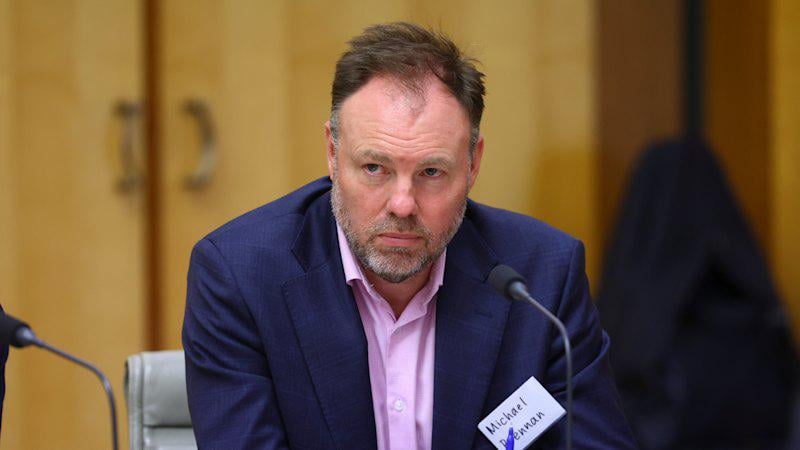
Institute director and former Productivity Commission boss Michael Brennan said when state and federal budget bottom lines were combined, the country had been in deficit since 2008.
Since the global financial crisis and the pandemic, both levels of government had struggled to repair their fiscal buffers. At the same time, government decisions to increase spending plus the higher costs of an ageing population had hurt budgets.
Brennan said the growing pressures, particularly from the health system, would mean the federal government would need to lean more heavily on income tax, which already accounts for half of all Canberra’s revenue.
He said the current budget could not sustain a move towards European-style universal services such as childcare, the NDIS and aged care.
“There is no imminent debt crisis, but with renewed pressures ahead – like an ageing population and slow productivity growth – Australia’s fiscal options are narrowing,” he said.
“Without tax reform, spending restraint will be needed to avoid burdening future generations with a fragile, inequitable and inefficient Australian economy.
“Potential directions include a renewed focus on efficiency in state service delivery, curtailing cost pressures through great means testing of in-kind transfers and, inevitably, hard choices about priorities.”
The institute found that Australia’s fiscal discipline had been deteriorating for almost 30 years, but it had been partly hidden by the benefits of a younger, growing population up to 2011. This had reduced pressure on services such as health while inflating government revenue.
But this had turned around with the retirement of the first Baby Boomers, yet government spending had continued to grow at almost the same pace, leaving budgets increasingly under pressure.
The institute found governments had to find ways to reduce spending growth while lifting overall productivity growth.
But a new report from the Productivity Commission, released on Thursday, found multifactor productivity, which measures the combination of worker activity with machines and technology, fell by 0.5 per cent through 2024-25.
It was a sharp deterioration on the modest 0.1 per cent growth in 2023-24 and well short of the 20-year average growth of 0.4 per cent.
The decline was driven by the mining sector, where it fell for the fifth consecutive year, dropping by 3.2 per cent. The drop in mining productivity is largely due to resource companies accessing deep and more expensive deposits.
Other falls were recorded in the labour-intensive hospitality sector, manufacturing and construction.
The single largest increase was in agriculture, forestry and fishing, in which productivity rose by more than 10 per cent. There were also strong performances in arts and recreation (up 5 per cent), communications (4.3 per cent) and administrative services (4 per cent).
Commission deputy chair Alex Robson said skill levels of workers and investment by businesses in new machines and technologies were key factors in the poor productivity performance.
“While our labour force continues to grow, we also need a skilled workforce that can adapt to changes and meet employer demands,” he said.
“Likewise, our workers need capital to be their most productive. While the amount of capital is crucial, the quality of our capital matters too – it is important that we invest in the right types of assets and use new and existing capital effectively.”
Another factor is national infrastructure, which enables businesses and workers to move around the country.
But this week, the International Monetary Fund said all governments should co-ordinate the rollout of expensive infrastructure projects rather than compete for workers and equipment.
Queensland Premier David Crisafulli told the National Press Club the best thing his government could do was “tighten the belt” on projects and bring them in on budget.
Crisafulli, who said his state planned to build almost $120 billion worth of projects over the next four years, noted that construction activity in some other states was starting to slow, which would benefit Queensland.
Top-Farmer-6838 on
No shit.
It’s so simple…
TAX THE WEALTHY MORE
Oh and reduce their ability to minimise their tax….
Fuck me, it’s like it’s rocket science. It’s really not.
Interesting that income tax paid by the wealthy was FAR higher in Australia’s past…

2 Comments
Federal and state budgets are under increasing strain due to extra government spending and the nation’s ageing population, a new independent report has found, with warnings ordinary working people will have to pay higher taxes.
Compiled by the e61 Institute, the report into the state of government spending found Australia is on target for 20 consecutive years of combined budget deficits by 2028 as options narrow to turn around the bleak fiscal outlook.
Federal government spending as a share of the economy is on track to reach 26.9 per cent this financial year, with gross debt already at an all-time high of $990.5 billion. Spending and debt by the states and territories has grown even faster than federal expenditure.
Institute director and former Productivity Commission boss Michael Brennan said when state and federal budget bottom lines were combined, the country had been in deficit since 2008.
Since the global financial crisis and the pandemic, both levels of government had struggled to repair their fiscal buffers. At the same time, government decisions to increase spending plus the higher costs of an ageing population had hurt budgets.
Brennan said the growing pressures, particularly from the health system, would mean the federal government would need to lean more heavily on income tax, which already accounts for half of all Canberra’s revenue.
He said the current budget could not sustain a move towards European-style universal services such as childcare, the NDIS and aged care.
“There is no imminent debt crisis, but with renewed pressures ahead – like an ageing population and slow productivity growth – Australia’s fiscal options are narrowing,” he said.
“Without tax reform, spending restraint will be needed to avoid burdening future generations with a fragile, inequitable and inefficient Australian economy.
“Potential directions include a renewed focus on efficiency in state service delivery, curtailing cost pressures through great means testing of in-kind transfers and, inevitably, hard choices about priorities.”
The institute found that Australia’s fiscal discipline had been deteriorating for almost 30 years, but it had been partly hidden by the benefits of a younger, growing population up to 2011. This had reduced pressure on services such as health while inflating government revenue.
But this had turned around with the retirement of the first Baby Boomers, yet government spending had continued to grow at almost the same pace, leaving budgets increasingly under pressure.
The institute found governments had to find ways to reduce spending growth while lifting overall productivity growth.
But a new report from the Productivity Commission, released on Thursday, found multifactor productivity, which measures the combination of worker activity with machines and technology, fell by 0.5 per cent through 2024-25.
It was a sharp deterioration on the modest 0.1 per cent growth in 2023-24 and well short of the 20-year average growth of 0.4 per cent.
The decline was driven by the mining sector, where it fell for the fifth consecutive year, dropping by 3.2 per cent. The drop in mining productivity is largely due to resource companies accessing deep and more expensive deposits.
Other falls were recorded in the labour-intensive hospitality sector, manufacturing and construction.
The single largest increase was in agriculture, forestry and fishing, in which productivity rose by more than 10 per cent. There were also strong performances in arts and recreation (up 5 per cent), communications (4.3 per cent) and administrative services (4 per cent).
Commission deputy chair Alex Robson said skill levels of workers and investment by businesses in new machines and technologies were key factors in the poor productivity performance.
“While our labour force continues to grow, we also need a skilled workforce that can adapt to changes and meet employer demands,” he said.
“Likewise, our workers need capital to be their most productive. While the amount of capital is crucial, the quality of our capital matters too – it is important that we invest in the right types of assets and use new and existing capital effectively.”
Another factor is national infrastructure, which enables businesses and workers to move around the country.
But this week, the International Monetary Fund said all governments should co-ordinate the rollout of expensive infrastructure projects rather than compete for workers and equipment.
Queensland Premier David Crisafulli told the National Press Club the best thing his government could do was “tighten the belt” on projects and bring them in on budget.
Crisafulli, who said his state planned to build almost $120 billion worth of projects over the next four years, noted that construction activity in some other states was starting to slow, which would benefit Queensland.
No shit.
It’s so simple…
TAX THE WEALTHY MORE
Oh and reduce their ability to minimise their tax….
Fuck me, it’s like it’s rocket science. It’s really not.
Interesting that income tax paid by the wealthy was FAR higher in Australia’s past…
And we don’t have insane public debt….
Funny that