
The question on Wall Street’s lips this week has been about Iran: When and how will the war end? President Trump issued some positive updates over the past 48 hours, though some analysts have pointed out there’s little verifiable action at present to support those claims.
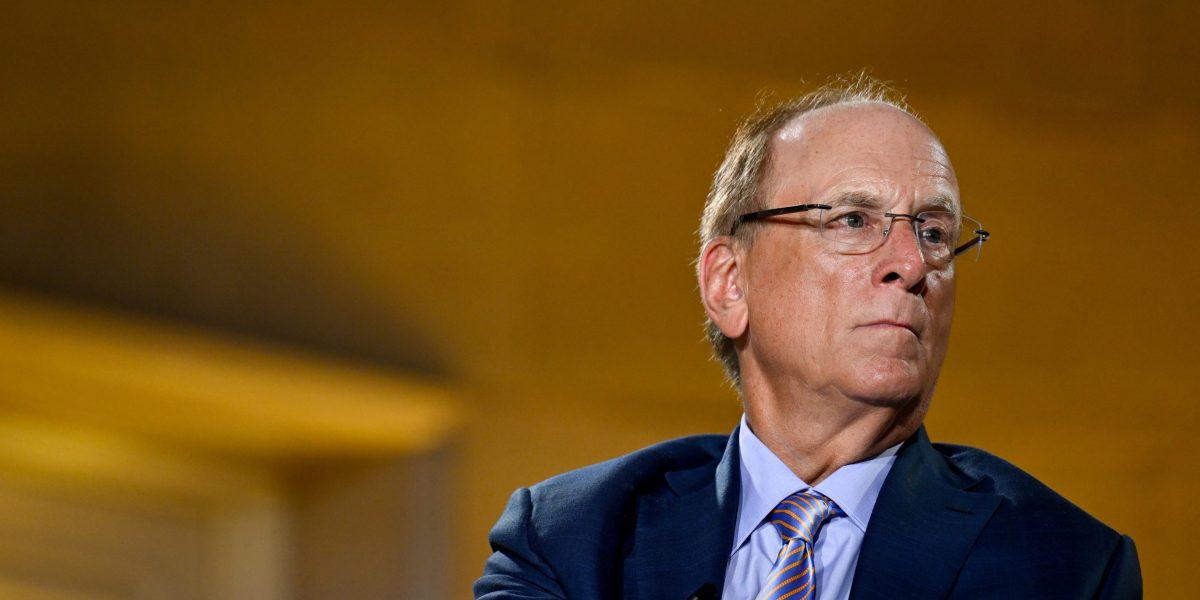
BlackRock CEO and founder Larry Fink sees the conflict ending in one of two extremes: Global powers accept Iran, and its goods and services (most importantly, its oil) is released onto the world market, pushing prices down. Or, the Iranian regime continues to stand at odds with global adversaries, and oil prices stay significantly elevated not for mere months, but for years.
Wall Street has been determinedly upbeat about the war in Iran resolving in a relatively short window—even the ever-skeptical Jamie Dimon, CEO of JPMorgan Chase, said he is a “little optimistic” about the long-term outcome of the current chaos in the Middle East.
Read more: https://fortune.com/2026/03/25/larry-fink-iran-war-oil-prices-two-extremes-recession-growth/
Source: fortune
8 Comments
[deleted]
Its abundance for him and recession for the rest.
Did we learn nothing from Landman – the ideal “sweet spot” for oil prices as between $70 and $90 a barrel. This range allows for profitability and continued exploration, without harming the broader economy
Fortune is a clickbait rag now; I didn’t click through.
And also
There is another option: one where we actually don’t care so much about the $/bbl of oil. We will still care, for a generation at least, but over time the importance of oil will diminish as we move to solar nuclear hydro and at the same time, the electrification of transport.
That seems like a rational response to this latest disruption.
So we have a simple dichotomy: the fantastic option and realistic one.
I’ll pass.
I’m not convinced.
More than likely the latter
And the Trump administration has done pretty much everything in their power to ensure that the US population and overall economy is unable to transition to alternative energy sources.
Coincidence?