
Jim Chalmers has been the federal treasurer since the Labor government was elected in 2022. In May, he’ll hand down his fifth budget, a task given a significantly higher degree of difficulty because of recent events in the Middle East. I spoke to him on Tuesday.
Fitz: Treasurer, good to chat. Are we in deep shit?
JC: No, I don’t think so. But we’re being tested by these events from the other side of the world. I think we can get through it if we all work hard together, but it’s going to be a tough period, there’s no use beating around the bush about that.
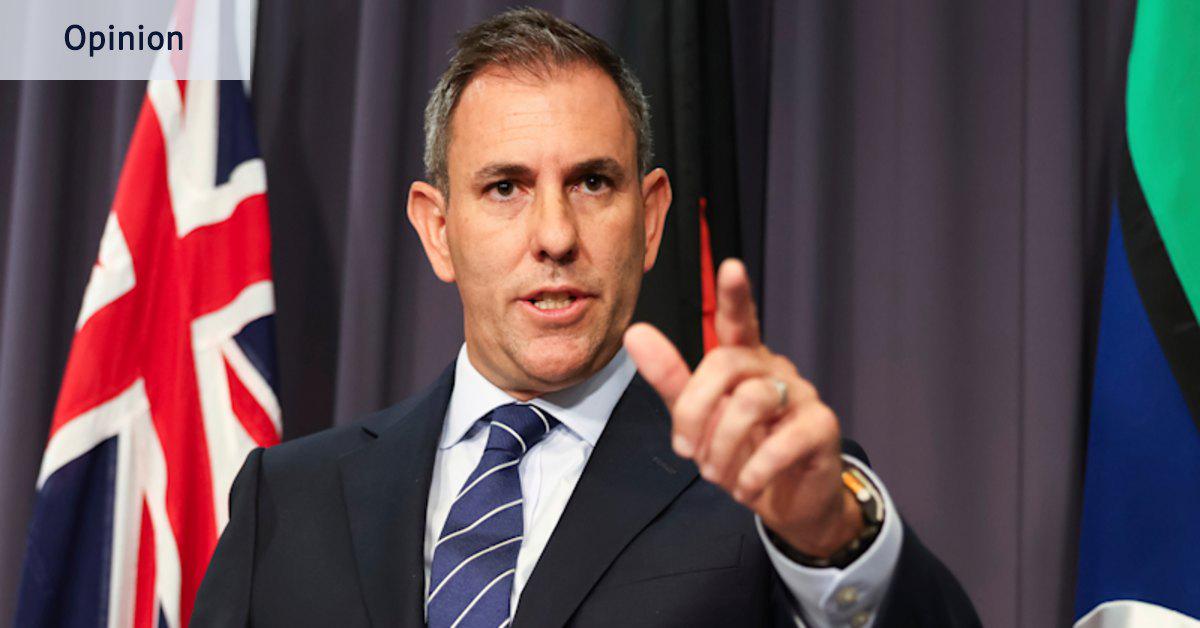
Jim Chalmers says his focus is on the Australian people, and “they didn’t choose this war, but they’re paying for it”.
Jim Chalmers says his focus is on the Australian people, and “they didn’t choose this war, but they’re paying for it”.Alex Ellinghausen
Fitz: “Events from the other side of the world.” I know that Trump’s barking mad, and I suspect that you know that Trump is barking mad. But in your public commentary on him, are you comfortable saying that he’s not just a danger to shipping, but a danger to the world economy, or do you have to use weasel words?
JC: [Jocularly] Well, if those are my options, I think I’ll take option C! But, more seriously, the way I come at this is my focus is on the Australian people, and they didn’t choose this war, but they’re paying for it, right? And Australian families aren’t assembled around the table in the Situation Room, working out how this war plays out, but they are assembled around kitchen tables working out how they’ll pay the price for it. So from an economic point of view, the end of the war can’t come soon enough because it’s punishing Australians for a series of decisions that they didn’t take.
Related Article
Prime Minister Anthony Albanese holds up a copy of the national fuel plan at Monday’s press conference.
Middle East at war
Everything you need to know about the Australian fuel crisis response
Fitz: You say, however that despite the straitened circumstances – Hormuz Strait? – you’re still going to put out an ambitious budget on May 12. Is your ambition in the realms of extra expenditure, more cuts or structural reforms?
JC: We’ve got three main focuses. There’ll be spending cuts, as there have been in all of our budgets. And there will be tax reform. We’re still working through a big menu of options on tax reform, and we’ll whittle that down over the course of the next few weeks in the usual way. But we’ve also got to lift the speed limit on the economy … to make sure the economy can grow quicker with lower inflation as we come out of this oil shock. And so there’ll be plenty of ambition in the budget. It’ll be about resilience and reform, not resilience or reform. The best way to understand the budget is it obviously will be about the pressures that people are under in the here and now because of this war in the Middle East, but it will balance that against some of our obligations to people in intergenerational terms.
Fitz: On that subject, it is surely clear to all that my Boomer generation – through a cosmic quirk or fortuitous timing – is generally generationally wealthier than both our parents and our children. It seems obvious to me the correct government policy is to do things like increase our tax on our untaxed income from super to maybe reduce the taxes on the next generations to even things out a bit. Is that obvious to you?
From our partners
JC: Well, we made some changes in super, which were pretty contentious, but we’ve landed them now. They basically do as you describe, which is make the tax breaks at the top fairer so that we can fund some more super for people on lower incomes, particularly younger people. And that is a bit of a hint at the sorts of options that we’ll work through, not necessarily in super, but in some of these other areas. We’ve been pretty upfront in saying there are intergenerational issues in our economy, in our society, and in our budget as well. We’ve taken some steps on housing and tax and superannuation, but we’re interested in seeing if we can do a bit more on that front. We want people to be wealthy, but we want to make sure, and I know you feel this very deeply, having known you for a long time now, we want to make sure that the generations that come after us do even better than we’ve been able to do. So part of that is making sure the tax system, or the economy more broadly, doesn’t make that impossible.
Fitz: Sure, but throw me a sausage. Give us a hint what the headlines will read the morning after your budget, beyond the Herald-Sun’s usual “CHALMERS’ LATEST SHIT-HOUSE BUDGET, STINKING UP THE JOINT!”
Related Article
Illustration: John Shakespeare
OpinionPolitical leadership
Paul Keating’s apprentice is painting a vastly differently portrait of Australia
Peter Hartcher
Peter Hartcher
Political and international editor
JC: [Uproarious laughter] Ideally, the headlines would reflect this balance that we’re trying to strike, helping people now and setting the place up for the future, and that will mean some hard decisions. I hope that people recognise that we’re working through a series of very complex, substantial issues in the near term and in the longer term, but …
Fitz: But treasurer! With the greatest respect, they are wonderful motherhood statements, but give us some nitty-gritty! Are you going to lift tax on superannuation? Are you going to reform capital gains tax? In what realm will the headline read?
JC: Well, we haven’t landed the thing yet, we haven’t made all the decisions, but ideally if we can land some of those decisions, if the headlines reflected that this is a tax reform budget, I’d be pretty happy.
Fitz: You wrote your PhD on Paul Keating, Labor’s most renowned reformer, but after four years in office, all you’ve done is tinker. Will Jim Chalmers be remembered for economic reforms that change Australia?
Related Article
Treasurer Jim Chalmers needs to wrestle with the surge in post-COVID budget spending.
Federal budget
Hey big spenders: Where the budget is blowing out
JC: I think that there’s been more economic reform than we get credit for, but there’s always more to do, and I’m ambitious about doing more. But we don’t come here, as the PM says, just to occupy the space. We’re here to make a difference, and in my part of the shop that does mean economic reform. If we get these decisions right in the next five or six weeks, then people will see more economic reform in the budget.
Fitz: But forecasts show the federal government will be in deficit for the foreseeable future. Do you really think the Commonwealth should live beyond its means for that long? How are you comfortable with that?
JC: Oh, we’re always looking to get the budget in better nick, and we’ve actually already engineered the biggest ever nominal improvement in the budget since Federation. Since the time we’ve been in office, we got the debt down, delivered a couple of surpluses, and found a whole bunch of savings, more than $100 billion in savings. But there will be more savings in the budget in May.
Related Article
Anthony Albanese at the National Press Club on Thursday.
Political leadership
Albanese locks in plans to scrap investor tax breaks as way through housing crisis
Fitz: In terms of your proposed tax reform, you got some surprising support this week from none other than Liberal Party leadership aspirant Andrew Hastie, on Insiders. He said: “This is a new era. We need to overhaul the whole tax system. We either fix the system or it’s torn down by people like Pauline Hanson.” He said the Liberal Party can no longer be “the first line of defence for corporate Australia”. It’s been said that he was uttering “truth bombs”. Are they?
JC: I was a bit surprised by that interview. Almost everything he said was at odds with what Angus Taylor’s been saying. So, obviously, there are some kind of internal issues there that will no doubt play out. But I don’t think that our political opponents have a coherent view about any of this. From day to day, one person will say something completely different to what the other guy said the day before, just gives you a sense of the disarray that we see among the three right-wing parties. But I try not to get distracted by that, I was interested in what Andrew had to say, but I’ve got bigger fish to fry when it comes to the big decisions we’re making.
Fitz: Yes, but would it be fair to characterise what he said as indeed truth bombs?
JC: I think that’s how he’d see it. He’s doing his best to differentiate himself from his colleagues in that regard. If his view is that the tax system is not as fair as it can be, then obviously I share that view. If his view is that Australians are paying a hefty price for this war in the Middle East, well I had that view before he popped up on Insiders. But I think it was a political strategy by him playing out there.
Fitz: You think the “bomb” part of the truth-bomb was aimed squarely at Mr Taylor?
JC: Yeah, I think he’s lobbing a few at Angus. I think it is probably dawning on a lot of the Liberal Party that they were probably doing better under Sussan Ley than they are under Angus Taylor. So, again, not my concern, but I wonder whether they’ve got some buyer’s remorse.
Fitz: What is more damaging to working people, inflation or unemployment?
JC: I don’t think you can split them. We want to get inflation down and keep unemployment low, and we want to keep the place ticking over. That’s really the troika that we care most about: growth, inflation, unemployment. The reason I focus a lot on unemployment, probably a bit more than my recent predecessors, is because that’s the people-facing part of the economy. And as a Labor treasurer, I’m sort of obsessive about what our decisions mean for real people in real communities, including the one that I represent.
Fitz: And yet if you hit the accelerator to reduce unemployment, doesn’t that then risk higher inflation?
JC: In its simplest form, that’s the balance that people talk about. It’s a bit more complex than that. But for a pretty substantial period, not that long ago, we had inflation coming down very substantially, even though unemployment was still in the high threes and low fours. So it’s possible to have faster growth and low unemployment with lower inflation. Our job as a government is to make sure we lift the speed limit on the place so that we can get more growth and more unemployment without it adding to inflation.
Fitz: Can you tell me something nice about Tim Wilson, your shadow treasurer?
JC: He’s up and about. I kind of like that. I don’t mind a scrap. But so far he’s had an absolute shocker. I mean, he got sprung betting against Australia on the sharemarket. He got the fuel excise wrong. He behaved like this kind of bizarre karaoke clown in the parliament. And I think he’s kind of fizzed out a bit quicker than the norm. He’s got a very healthy opinion of himself. But I try and not dismiss any of my opponents. I’ve had three opposite numbers in less than 12 months. He’s probably the most extreme of all of them, and the riskiest.
Fitz: Bloody, hell. If that’s the nice thing you’ve got to say, I’d hate to see what you’d say if you were going to have a go!
JC: [Laughs]
Fitz: Given the recent rise of One Nation in the polls, who is their strongest voice when it comes to economics? And as you look from the bridge of our Ship of State and navigate the economy, are One Nation views indeed showing up on your starboard quarter and worth altering course for, at least politically?
JC: I think what One Nation is trying to do is to pick up on, and pick at, the very real concerns and frustrations people have about the pressures they’re under in their household budgets. And I don’t lightly dismiss the views that people raise in communities about that pressure and how they respond politically to that. But I don’t detect a lot of answers in what One Nation is peddling. They’re trying to make people angrier, trying to divide people, and they spend none of their time trying to work together with people who want to solve the issues in our economy.
Related Article
Hanson, with One Nation recruit Barnaby Joyce last week, says her intention is to form government.
OpinionOne Nation
Why the rise of One Nation is a middle finger to the whole political circus
Parnell Palme McGuinness
Parnell Palme McGuinness
Columnist and communications adviser
Fitz: All right. We’ve already seen the impact of AI on job losses. You’re about to meet [on Wednesday] with the head of Anthropic, the international mob focused on ethics in AI. How can we ensure we don’t make the same mistakes with AI as we made with social media, which was we didn’t regulate and we’re now trying to retrofit it.
JC: It’s really important. Yeah, we’ve got to try and capture the big economic upside of AI at the same time as minimise the risk to people, and that means working closely with the AI companies. We’ve got a lot of skin in the game here. This can go really well or it can go really badly. We have choices about the obligations that we put on companies when they build data centres, for example, we’ve got a role to play in protecting copyright and content creators. We’ve got a role to play in making sure that workers are included in this, that people can be beneficiaries of it, rather than victims.
Fitz: Property prices are falling in Sydney and Melbourne. Is that a good or a bad thing?
Chalmers and Prime Minister Anthony Albanese. “We talk about rugby league a lot, as you would expect!”
Chalmers and Prime Minister Anthony Albanese. “We talk about rugby league a lot, as you would expect!”Alex Ellinghausen
JC: We want to see more affordable options in the market. We don’t target an aggregate average, what we try and do is to make sure that more people, particularly more first home buyers, can get a toehold in the market. And so the 5 per cent deposits policy is about that; building more homes is about that; trying to make sure that there are affordable options for people. We’re making some progress there, but we’re playing catch-up. It’s one of the big intergenerational issues in our economy, access to housing. And so we want people to have more choice and more options, and that means making more homes available to people who are looking to buy their first one rather than their 10th one.
Fitz: How are you getting on with Albo, and as a matter of interest, when you find yourself in a Canberra restaurant with him and five cabinet colleagues, would you say, “Could you pass the salt, please Albo”? Or would you say, “pass the salt, please, prime minister”?
JC: Definitely “Albo”. And sometimes even in the formal settings, we all slip into that: “Albo” or “Anthony”. It’s because we’ve known this bloke for so long. He’s only been the PM for a sliver of that time. Most people are pretty casual with that, and I think that’s what he likes and what he expects. I am tight with Albo, and we work together really closely. And, most weeks, we meet and talk multiple times, trying to land some of these big issues in budgets and elsewhere, to try and do the right thing by people. We meet one on one. We talk about rugby league a lot, as you would expect! And, you know, we’re tight with Jodie too. Our wives, Laura and Jodie, are tight. And so, yeah, it’s a terrific working relationship. I’ve got so much respect for him and the job that he does. And you know, I enjoy trying to do a job for him.
Fitz: Speaking of having dinner, I can’t help but notice you look like a different man. You were telling me the other day, you’ve dropped at least two stone in three months or so. I’m hoping it’s because you’ve been working night and day on economy and budget, not anxiety?
Related Article
Good Weekend
‘I don’t do moderation, in anything’: Why Treasurer Jim Chalmers went on the wagon
JC: I’ve dropped almost 17 kilograms now, which, if I’m honest, Fitz, I’m proud of because I was just way too heavy at the end of last year. I think, like almost every Australian, you wake up on Boxing Day and you think, I’m probably heavier than I need to be. I know you’ve been through that transformation too, and so I want to be in the best nick I can be to do a great job for people, and that means making sure you’ve got enough energy. And so for me, probably 90-95 per cent of it was sorting the food out, but some lap swimming as well, which to this point hasn’t really been my thing.
Fitz: And grog? How much grog have you had in the last three months?
JC: Zero. I haven’t had any grog for six years.
Fitz: Can I claim credit for that?
JC: You can. I think I was telling you before, Fitz, that book that you wrote about slimming down, giving up grog and getting fit really did have a big influence on me. I thought it was a cracker. I turned 48 the other day. You want to get on top of things before it’s too late. You want to set a good example for your kids on this front. And for me, just before New Year’s, I really just decided to try and get on top of things, and I’m proud of the progress I’ve made. I thought if I got into slightly better nick, then I would be in a better place to kind of deal with the rigours of the day.
Fitz: Good luck to you, and thank you for your time.
Source: Nyarlathotep-1