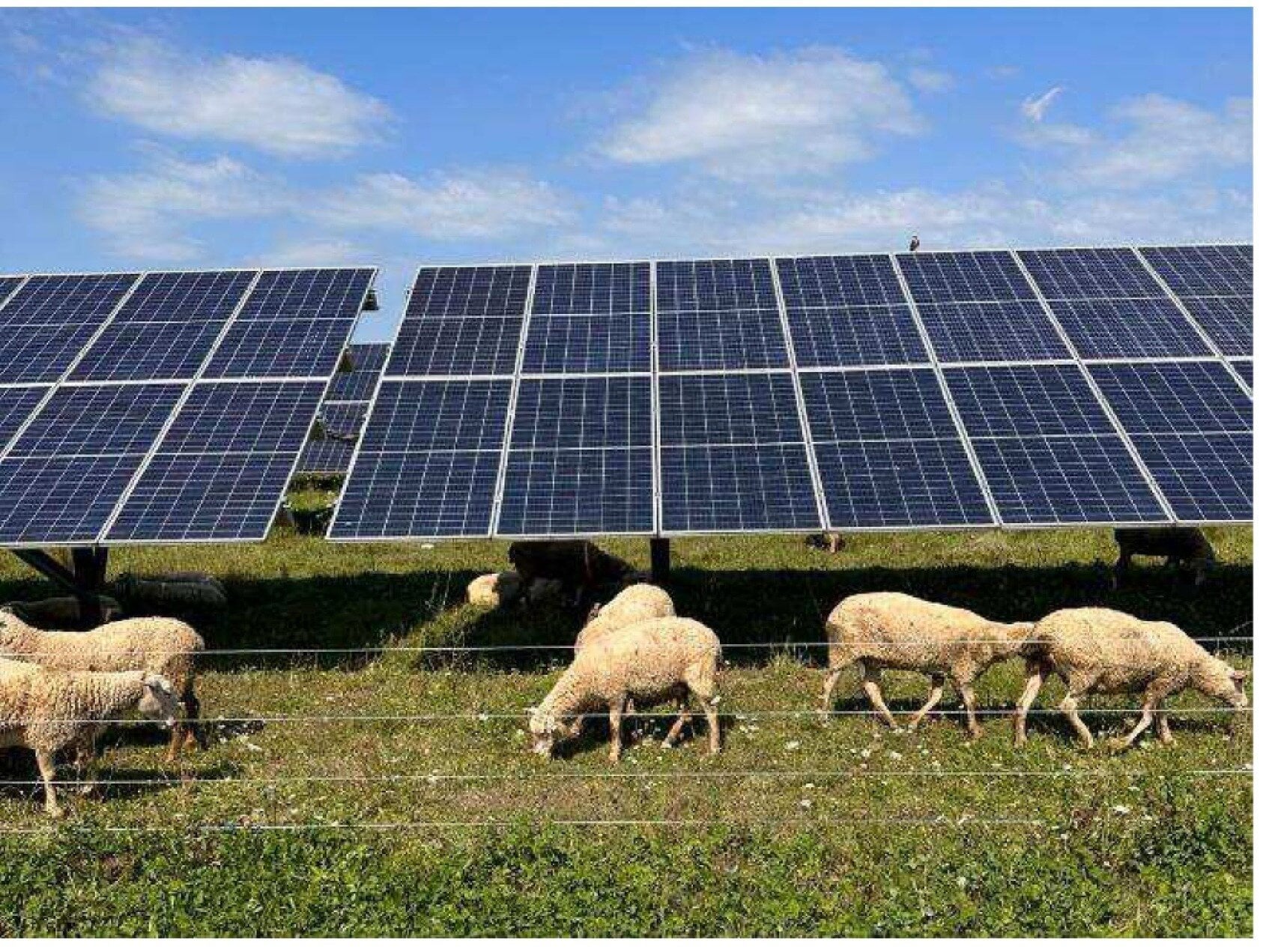
>The sheep like the shade, plus the solar panels increase grass yield and protect sheep from predators,”
It isn’t obvious that solar panels would increase grass yield, because grass is solar powered. But plants require water to perform photosynthesis, and they close their leaf pores during times of water stress, which is common in full sun. This study is focused on economic viability, but [other studies in similar climates show decreased grass production in spring and fall, compared to open grazing land.](https://www.pv-magazine.com/2024/06/28/new-agrivoltaics-data-shows-improved-grass-forage-production-under-solar-panels/) This reduction is offset by a increase in summer grass production. Drier and warmer climates have greater benefit from shade. Bees can also be kept on the solar farm, depending on how much local pastures have flowering plants vs. grasses.
Globally, we’re installing over a thousand square kilometers of photovoltaics every year, and it is accelerating. This is opens a serious question about land use, but the answer to that question is that it is awesome. The land is still fully usable for moderate intensity agriculture, and it supports more biodiversity than monocrop agriculture. The United States currently has nearly two million square kilometers of corn used entirely for fuel, to put the land use in perspective.

1 Comment
>The sheep like the shade, plus the solar panels increase grass yield and protect sheep from predators,”
It isn’t obvious that solar panels would increase grass yield, because grass is solar powered. But plants require water to perform photosynthesis, and they close their leaf pores during times of water stress, which is common in full sun. This study is focused on economic viability, but [other studies in similar climates show decreased grass production in spring and fall, compared to open grazing land.](https://www.pv-magazine.com/2024/06/28/new-agrivoltaics-data-shows-improved-grass-forage-production-under-solar-panels/) This reduction is offset by a increase in summer grass production. Drier and warmer climates have greater benefit from shade. Bees can also be kept on the solar farm, depending on how much local pastures have flowering plants vs. grasses.
Globally, we’re installing over a thousand square kilometers of photovoltaics every year, and it is accelerating. This is opens a serious question about land use, but the answer to that question is that it is awesome. The land is still fully usable for moderate intensity agriculture, and it supports more biodiversity than monocrop agriculture. The United States currently has nearly two million square kilometers of corn used entirely for fuel, to put the land use in perspective.
OP should crosspost this to r/agrivoltics