
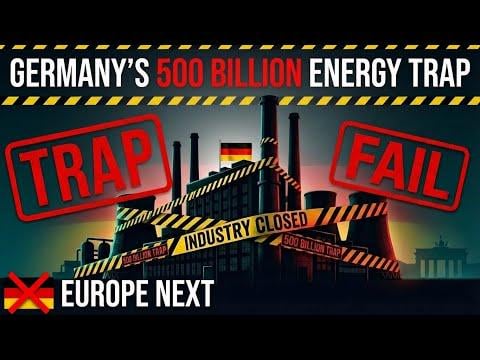
In 2021, Russia supplied about 52% of Germany's gas imports. By September 2022, Nord Stream deliveries hit zero.
That's not a policy debate. That's a price shock.
Fast forward to 2025:
- Germany's electricity prices are around 38 euro cents per kWh (Reuters, Q1 2025). Among the highest globally.
- US industrial retail electricity sits around 8.13 cents per kWh (EIA, 2024).
- France just recorded 89 TWh in net electricity exports in 2024 — their highest ever (RTE).
The gap is massive. And it's showing up in industrial decisions:
- BASF is closing major assets at Ludwigshafen while expanding capacity in China
- VW is floating factory closures in Germany for the first time in its history
- A 2024 Reuters survey found over a third of German industrial firms reducing core investment due to energy costs
The question energy-intensive manufacturers are asking is simple: why produce here when we can run cheaper somewhere else?
This video breaks down the pattern — how energy cost divergence leads to industrial hollowing, and why the transition window matters more than the destination: https://www.youtube.com/watch?v=FomhunPUWYw
Curious what this sub thinks — is Germany's cost position recoverable, or are we watching deindustrialization in slow motion?
Source: HMB94