Polar bears became the poster child for the peril of climate change for obvious reasons: They hunt seals from the ice, and as fossil fuels warm the planet, [the ice where these bears live is melting](https://arctic.noaa.gov/report-card/report-card-2025/sea-ice-2025/).
For more than three decades, scientists [have been warning](https://journalhosting.ucalgary.ca/index.php/arctic/article/view/64403/48338) that climate change could drive polar bear populations extinct. That message infiltrated the public psyche, perhaps more than any other about the scourge of global warming.
But as scientists are continuing to learn, the reality for these iconic bears is more complicated.
Yet, there are 20 distinct polar bear populations around the world, and they all behave slightly differently. Warming is not uniformly killing them.
Perhaps, then, polar bears aren’t the best mascot for the climate crisis — a point some advocates [have been making for a while](https://grist.org/culture/climate-change-polar-bears-symbol-history/) — especially when there are countless other species imperiled by rising temperatures.
plasmid9000 on
Surprising finding. I was expecting the … polar opposite.

3 Comments
Polar bears became the poster child for the peril of climate change for obvious reasons: They hunt seals from the ice, and as fossil fuels warm the planet, [the ice where these bears live is melting](https://arctic.noaa.gov/report-card/report-card-2025/sea-ice-2025/).
For more than three decades, scientists [have been warning](https://journalhosting.ucalgary.ca/index.php/arctic/article/view/64403/48338) that climate change could drive polar bear populations extinct. That message infiltrated the public psyche, perhaps more than any other about the scourge of global warming.
But as scientists are continuing to learn, the reality for these iconic bears is more complicated.
In 2022, scientists [published a study](https://www.science.org/doi/10.1126/science.abk2793) showing that polar bears in southeastern Greenland were [able to use glacial ice instead of sea ice to hunt](https://www.vox.com/down-to-earth/23168326/polar-bears-sea-ice-glaciers-extinction-greenland), sheltering them from some of the impacts of warming. And a study [published late last year](https://link.springer.com/article/10.1186/s13100-025-00387-4) revealed some changes in polar bear DNA that may [help them adapt to hotter weather](https://www.vox.com/climate/472312/greenland-polar-bears-research-climate-adaptation).
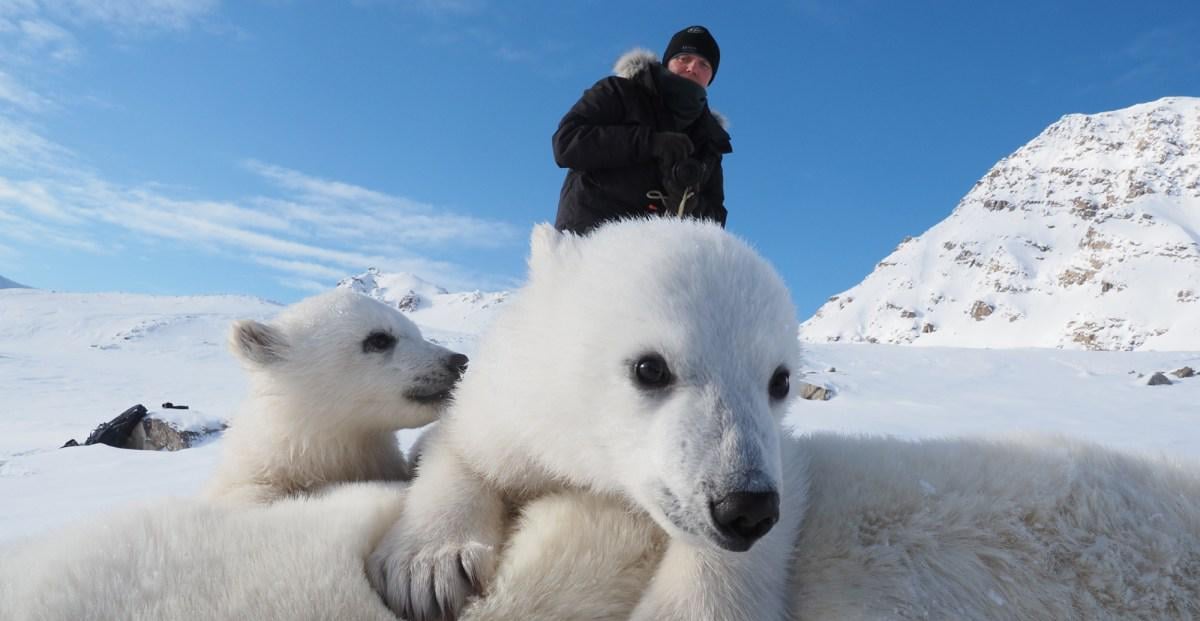
Now, [research](https://nlcontent.springernature.com/d-redirect/TIDP4723349X59C114AE0A5946378022EB393E01B08CYI4/?data=Y%2fEoBuyuOiGbwlHZFeIhh2maFh3evqEUonAeq7T5wSDVLnPcDhjshfzZxE6hiGr1%2fDICswTg3t6TyuKqz3rB1MF%2bEd05%2fuNTVMYkTzCeSR1BLgt5zUr7rsl2w%2fCEIzo%2fKOkQfet80vQ3FqNZdXgSt%2beLUzV1eMuwfOqw83TKg4r9KWnV4kAifY4ssrHpwDKdPMfF435SCdjwEAEYN53YMDKrSPkvJyjmkwMUQSIF53Ar%2biCP1QsaaY%2boFBYUkPve5roc7yqK9inwj4PrZWVc03rmKfoGrlM72daccTDiuo%2btjxsJhKqCHtVbakxtg%2fecq4VgAvh%2f3%2fdKTXk6zINi9aC3or1cLAdA5Vf05tK4V6WJhJNiotzbmr8PTV%2biIjiq) in the journal *Scientific Reports* adds yet another wrinkle of hope for the species. The study, an analysis of hundreds of polar bears in the Norwegian archipelago of Svalbard, found that declining sea ice is not causing polar bears to starve. They actually appeared healthier in the last two decades of the analysis, from 2000 to 2019. The overall population, meanwhile, is either stable or growing, according to Jon Aars, the study’s lead author and a scientist at the Norwegian Polar Institute.
“I was surprised,” Aars told Vox from Svalbard. “I would have predicted that body condition would decline. We see the opposite.”
The new study makes clear that, in other regions, the loss of sea ice from warming is indeed linked to ailing polar bear populations. In Canada’s Western Hudson Bay, for example, researchers [have tied](https://esajournals.onlinelibrary.wiley.com/doi/full/10.1890/15-1256?sid=nlm%3Apubmed) melting ice to lower bear survival and [a shortage of food](https://www.science.org/doi/10.1126/science.adp3752), finding that the population has [roughly halved](https://polarbearsinternational.org/what-we-do/research/western-hudson-bay-polar-bears/) since the 1980s. Climate change remains the largest threat to these animals.
Yet, there are 20 distinct polar bear populations around the world, and they all behave slightly differently. Warming is not uniformly killing them.
Perhaps, then, polar bears aren’t the best mascot for the climate crisis — a point some advocates [have been making for a while](https://grist.org/culture/climate-change-polar-bears-symbol-history/) — especially when there are countless other species imperiled by rising temperatures.
Surprising finding. I was expecting the … polar opposite.
Hope is the thing with…white fur?