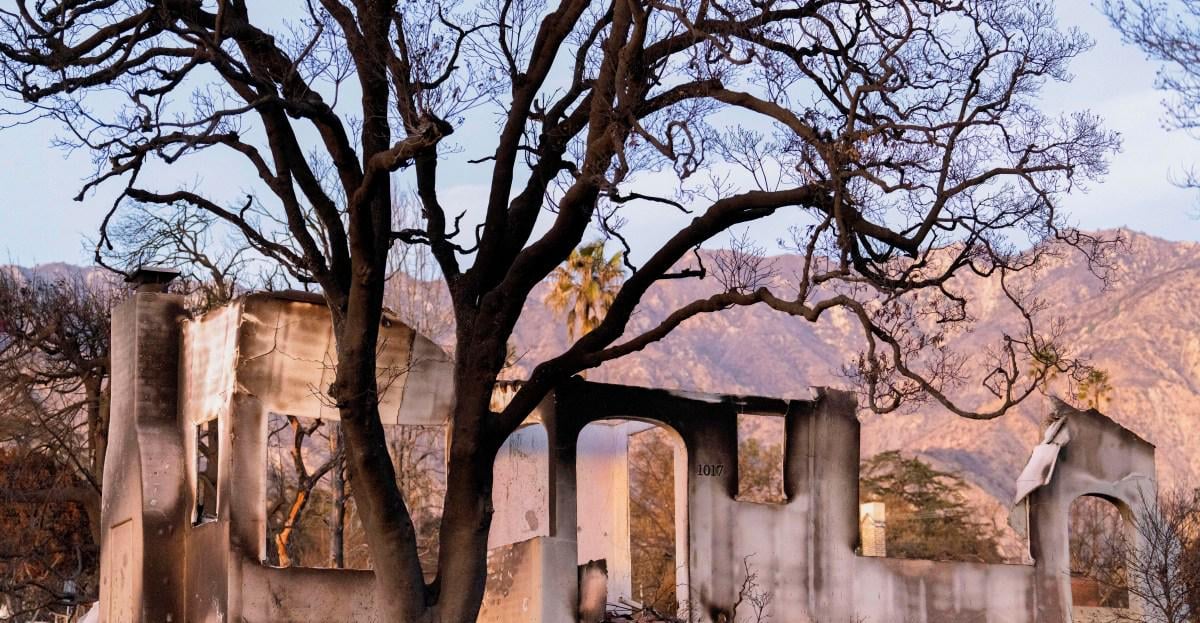
For instance, many homes that remain in the neighborhoods that burned in the historic Los Angeles wildfires last year are still considered as having “low risk” in assessments from the Federal Emergency Management Agency (FEMA) despite the charred remains of their neighbors showing how vulnerable they might be to embers blowing from miles away.
It raises an urgent question: Do we actually know which homes face the most danger of burning?
Government risk maps are too coarse for the way wildfire works now. But new tools powered by AI are giving us a clearer picture. They could reshape how we understand the dangers that lie ahead and force a reckoning over where we live and how we build and protect our homes — if we choose to listen.
ResistantRose on
AI datacenters contributing to climate change, and those same data centers are telling us where we can live. It’s already telling companies who’s insurable. Redlining for the modern world.

2 Comments
A lot of us might assume that most homes that are destroyed by wildfires were in obvious, high fire-risk areas, like on the edge of forests that frequently burn. But wildfires are a faster-growing and much closer threat than we may realize — burning in [places](https://www.vox.com/climate/24111549/wildfire-risk-increasing-everywhere-us-east-south) that [rarely used to see them](https://www.vox.com/climate/23868557/wildfire-risk-states-climate-change-extreme-weather-events).
For instance, many homes that remain in the neighborhoods that burned in the historic Los Angeles wildfires last year are still considered as having “low risk” in assessments from the Federal Emergency Management Agency (FEMA) despite the charred remains of their neighbors showing how vulnerable they might be to embers blowing from miles away.
It raises an urgent question: Do we actually know which homes face the most danger of burning?
Government risk maps are too coarse for the way wildfire works now. But new tools powered by AI are giving us a clearer picture. They could reshape how we understand the dangers that lie ahead and force a reckoning over where we live and how we build and protect our homes — if we choose to listen.
AI datacenters contributing to climate change, and those same data centers are telling us where we can live. It’s already telling companies who’s insurable. Redlining for the modern world.