
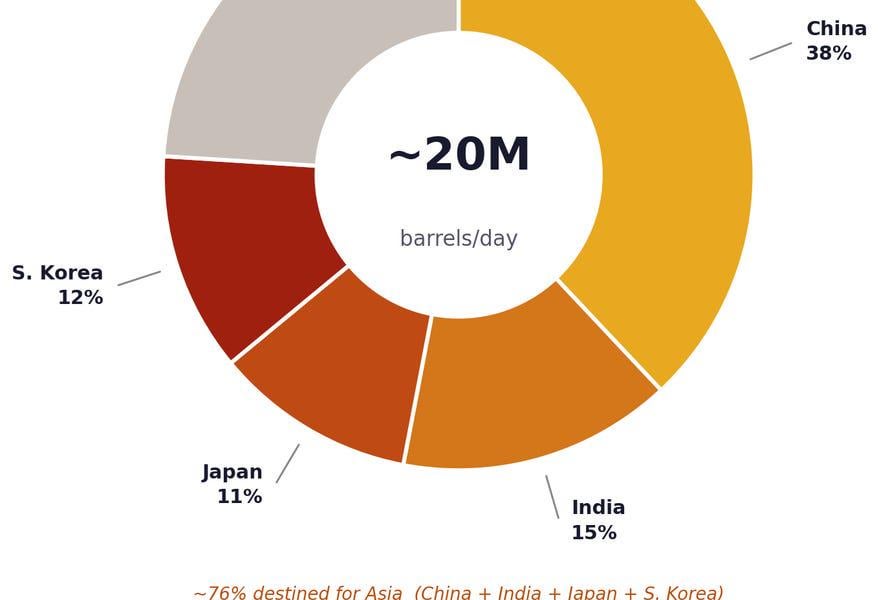
The Strait of Hormuz is about 21 miles wide at its narrowest point. Roughly 20% of the world's oil and a third of all liquefied natural gas pass through it. When the conflict escalated and commercial traffic effectively stopped, that pinch point became the mechanism for a global energy shock that most people haven't connected to what they're seeing at the pump or on their power bills.
Oil went from around $70 to over $110 a barrel in a matter of weeks. That's a 57% move. Gas at the pump in the US crossed $3.60 nationally. But the electricity story is the one that gets overlooked.
Spain runs a significant share of its grid on natural gas. LNG tankers that would normally come from Qatar and other Gulf exporters got rerouted or delayed. When supply tightens in a gas-dependent grid, spot electricity prices respond fast. Spain's day-ahead power prices briefly hit levels roughly 700% above where they were seven days prior.
The interesting part is how fast a physical chokepoint in the Middle East becomes a grid reliability problem in Seoul or Madrid. The energy system is more connected than most people realize until something like this happens.
How are the Iran war and the closure of the Strait of Hormuz affecting the energy industry?
Source: peachforbreakfast
2 Comments
Some people also got a few periods of free electric, this was due to the weather and all our wind turbines!
More renewables please
This is fake news
Spain has weeks of ultra low electricity prices because solar and wind was producing more than the country could use.
Electricity was .03€ for 5 hours today and went to a maximum of .27 only because there was a lack of wind.
Stop with the dramatic titles.
Even right now at 8:30pm with zero solar, the National grid is running on 83% emissions free sources and 67% renewable energy