
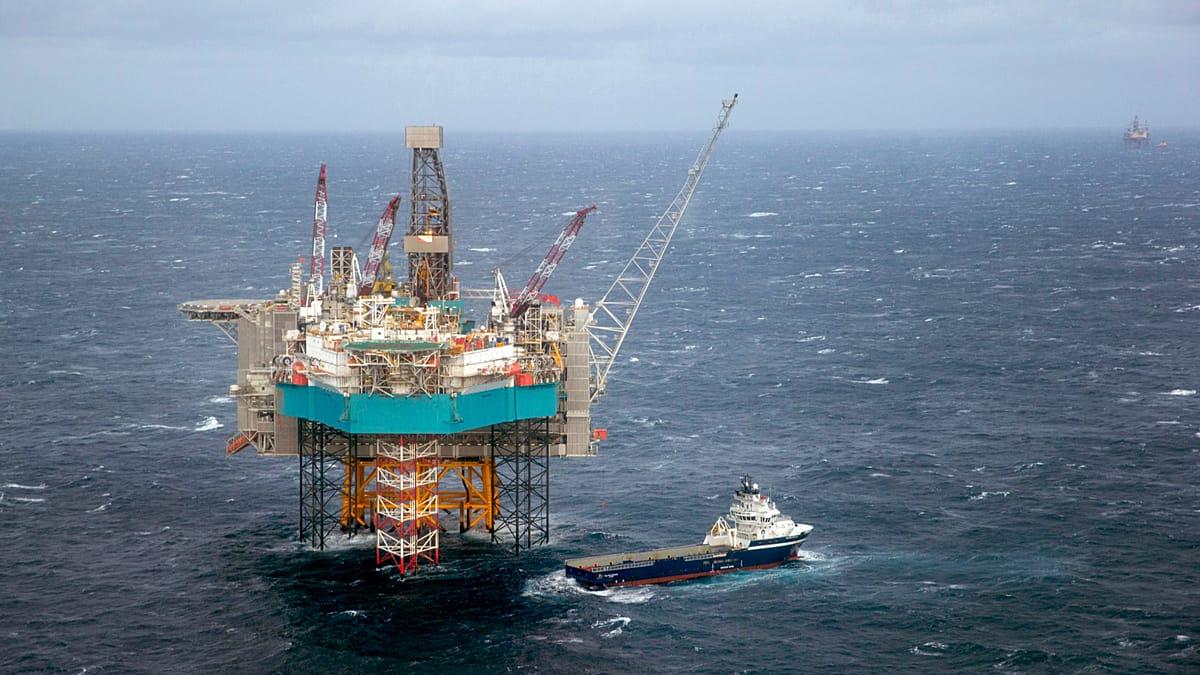
‘Sheer fantasy’: Why drilling the North Sea for oil won’t lower Europe’s soaring energy bills. Escalating conflict in the Middle East has emboldened calls for the UK to open up North Sea drilling licences.
Source: The_Weekend_Baker
‘Sheer fantasy’: Why drilling the North Sea for oil won’t lower Europe’s soaring energy bills. Escalating conflict in the Middle East has emboldened calls for the UK to open up North Sea drilling licences.
Source: The_Weekend_Baker
2 Comments
OK I fear I’m stepping into the lions den, but I come in peace. For clarity I work in the North Sea oil industry, I do not deny climate change, and I believe we do need to transition away from fossil fuel dependence.
What I disagree with is that the debate in the public sphere centres on “new licences for drilling” and “energy costs”.
Regarding new licenses the reality is that most of the viable acreage in the North Sea is already licensed. What isn’t licensed doesn’t have any prospects; we’ve run the seismic (at huge expense), evaluated it and determined there’s nothing there. We don’t want it.
What we want is the ability to develop what we know is there in existing licences, and currently that is difficult because of the 78% tax rate introduced through the Energy Profits Levy (the windfall tax), introduced in 2022 by the conservative government, and increased by Labour in their first year in office. We therefore support a fairer tax system, that increases the rate of tax when the price of oil is unusually high (like now), but applies a more reasonable tax rate when the price of oil is at normal rates.
So why should we develop this resource ? Well not because it will directly bring down electricity bills or the piece of petrol at the pumps. Nobody in the industry claims it will, that’s just the idiot politicians. The reason we want to develop it is because we’ll make money (obvs) but in doing so we will create investment in the UK, create and maintain jobs, and pay tax to the treasury. We will not eliminate oil/gas imports, but we could reduce them, and that improves our balance of trade. An improved balance of trade means a healthier economy, a reduction in the cost of government borrowing, and more money available for public services, investment in green technologies or paying idiot politicians more money (the choice on what they spend it on is there’s). If we don’t produce more and slow the rate of decline in domestic production we will import more, generate less tax, have a worse balance of trade, etc. And of course we need a healthy economy to achieve net zero, not only to attract investment and afford the necessary infrastructure investment, but for individual households to be able to afford convert to heat pumps, EVs, etc.
In producing more oil and gas domestically we will also see a slight reduction in GHG emissions. Admittedly the majority of GHG emissions arise from the combustion of fossil fuels, but those emissions are the same regardless of where the oil came from. However there are emissions associated with its production and the UK sector emits less GHG per barrel than production operations in other parts of the world. Not the best, but significantly better than the global average.
Now some may argue “well we need to move faster to net zero”, and perhaps we do. But for context the UK’s Climate Change Committee forecast that if we successfully achieve net zero by 2050, we will have consumed 14 billion barrels of oil (of which we will have only produced 4 billion ourselves). And the in 2050 we will still be consuming 250,000 barrels of oil a day. Net zero isn’t about no fossil fuels, it’s a about a significant reduction (for the UK about an 85% reduction from current levels). If we fully exploited our own resource the 4 billion barrels could become approx 7 billion barrels. That would be a positive for our economy and increase our chance of getting to net zero. More domestic production is not a silver bullet but every little helps.
I’m more than willing to engage in reasoned polite debate on any of the points I’ve made.
I agree that there are certainly cases where powerful industry lobbying can delay a transition to alternatives as you describe regarding the coal industry in your country. But in the case of oil and gas in the UK the evidence shows that the availability of local supply has no direct impact on demand. UK production peaked in 1999, and since then has declined by 75% yet gas consumption has fallen by only 39% and oil consumption by 16% (these are figures published by the UK government). These reductions in consumption has come about by a massive decline in heavy industries, and by improvements in energy efficiency of home boilers, improved efficiency of conventional cars, and the slow switch to EVs. And the anti-oil lobby agree with this….they are fond of pointing out that increases North Sea production won’t bring the price of oil down, because it’s such a small percentage of global supply, but likewise not producing doesn’t constrain supply sufficiently to drive the price of oil up. And its price that drives the supply/demand economic model.
Regarding my assumption that the amount of oil used is fixed. That’s not the case. I specifically quoted the forecasts on UK oil consumption published by the UK Climate Change Committee. The CCC is the body of environmental scientists and economists that advise the UK government on what is needed to achieve net zero. They set a carbon budget on a five yearly cycle, setting a target for emissions reduction and advising on what action Government should take to achieve net zero by 2050. So the 14 billion barrels of oil I quoted as being consumed between now and 2050 is with government implementing a range of policies that successfully deliver net zero and reflects an 85% reduction in our use of fossil fuels from current levels. This consumption forecast assumes that by 2050 we have transitioned to 100% electricity generation by non-fossil fuels (a mix of wind, solar, nuclear and hydrogen), as well as a transition to full EV ownership.
On your point regarding the UK oil sectors contribution to GDP being small, you are correct, and you are right that investment in alternatives can still take place. But cut GDP by 0.5% and your ability to invest in alternatives is reduced, and the pace of change will slow. Interestingly British farming contributes a similar amount to GDP. Perhaps we should just close all our farms and import all of our food ?