Hey r/climate, Nikol from USA TODAY here*.* Yes, winters really got shorter.
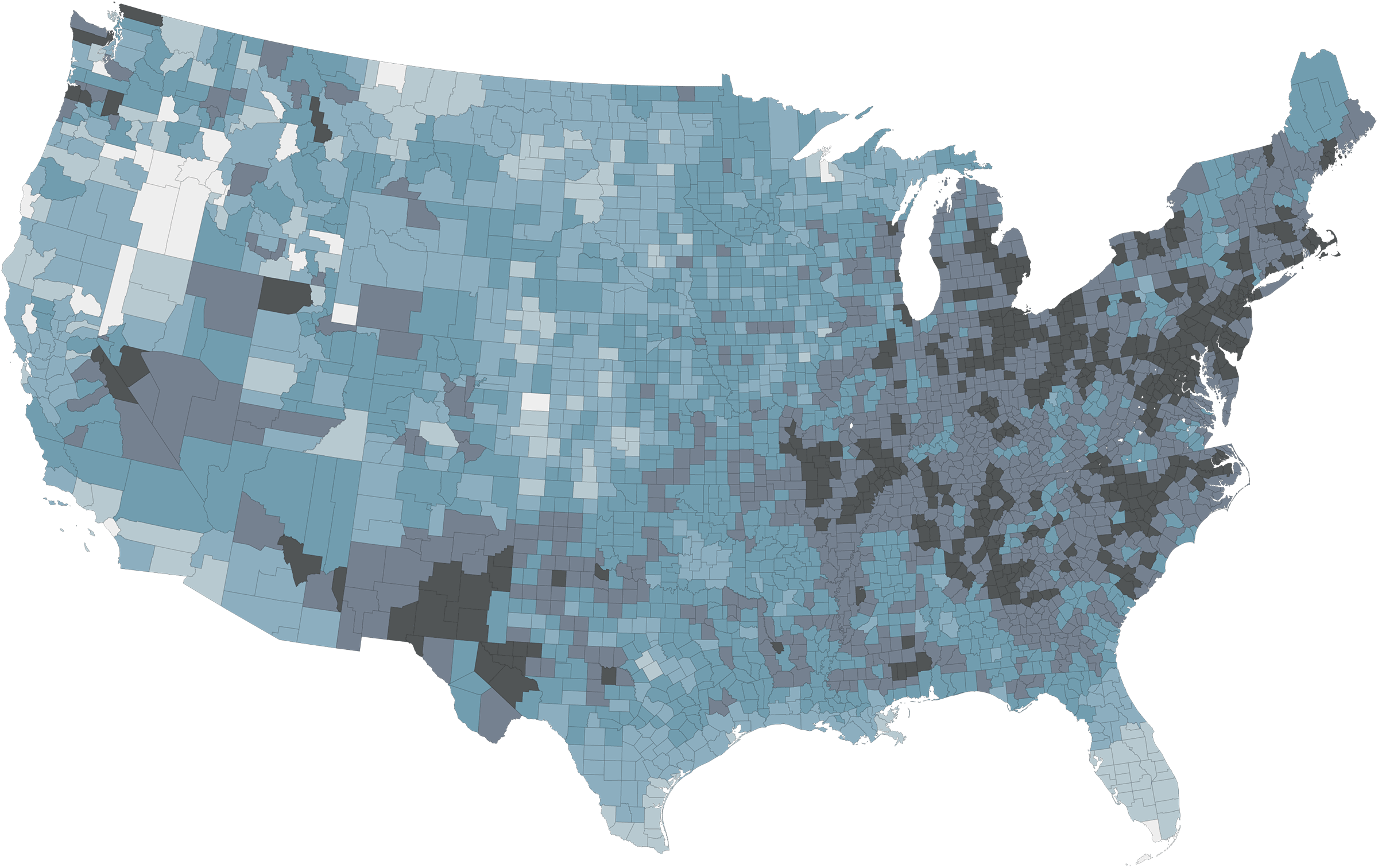
The number of freezing days has shrunk by weeks in most places across the United States over the past seven decades.
All these shifts will impact diseases, drinking water, agriculture, winter recreational industries, local identity and the loads of money hanging in the balance.
And tell us how shorter winters are impacting you.
Fred42096 on
Over the last ~25 years here are the changes I’ve noticed (this is entirely anecdotal and memory-based. Take it with a grain of salt.)
Also, forgive the stream-of-consciousness non-organization.
Gardening is harder. Plants try to produce at inopportune times that result in stunted yields and unpredictable harvests. I had a grapevine produce a bunch in December last year. I found volunteer tomatoes growing between freezes. Even summer heat-loving crops still struggle to grow because of prolonged heat and sun; while the concept of growing things here has always been about taking advantage of “pre summer” and “post summer” planting, the windows of favorable weather shift erratically year to year and fewer and fewer plants are surviving the July-August heat wall.
Clothing expectations have changed. While I’ve always lived in a warm climate, you still needed coats off and on starting in November. Now you can wait until mid to late January before you actually need to bundle for the weather. This has caused a noticeable shift in fashion expectations for younger generations who have scant memories of consistent cool autumn/winter weather. When I was teaching I had some interesting discussions with students about what their concept of autumn/winter weather meant, compared to my own concept I grew up with. Many kids don’t even own heavy coats anymore, and certainly never wear them to school the way we used to.
Rather than a predictable 1-2 snows of 3-6” per year on a backdrop of consistent cool temperatures, winters are now long stretches of warm weather punctuated by week-long catastrophic freezes. “Winter” is being compressed into ever-shorter and more intense windows, while the rest of the season is unsettlingly temperate.
The seasonal irregularity (when does each season start and end? Who knows!) is definitely affecting invertebrate populations. This year many common garden bugs hatched and were out and about long before they should’ve been, and there’s not a lot for them to eat during the winter even if it’s warm. Life cycles are all over the place.
Keep seeing the wrong birds at the wrong time of year as migration patterns shift. I also rarely see the massive flocks that I remember as a kid seeing all the time.
Summers have always been hot, but now they stay hot longer and peak at higher temps. When I was in HS marching band, we rehearsed outside in the summer for around 5 hours/day. Nowadays band programs can’t really keep their kids outside more than 2. Heatstroke is far more common in kid’s extracurriculars. Heat on the blacktop is several degrees warmer now than it was when I was a teen (I’ve heard it’s something like 4-6F warmer on the ground from 2010-2020, but I don’t know where that info comes from or how true it is).
On the same topic of marching band memories, I remember every year at the end of football season it would be *frigid* in the mornings during rehearsal. Every year we’d wear coats and see our breath in chilly autumn mornings. The band would play horribly flat as the cold messed with tuning. It was a normal part of the experience. Most HS band kids I’ve talked to now have seldom had to so much as don a long pants or a sweatshirt during football season.
Seasonal cooldown usually happened at the end of October/early November. Now, as I already mentioned earlier, there is not reliable “cooldown” so much as there are periodic temperature rollercoasters that kick off around Thanksgiving and don’t really get to a proper winter consistency until winter is almost over.
Most summers in my life typically got up to around 100-105F during heatwaves, and said heatwaves usually dissipated after a few days and settled back into the mid-90s. Now it is not unusual to have 105-115F waves that last for weeks on end.
This past year, we had 90F+ highs *in November*. That’s crazy, even for us. Probably something you can write off as an anomaly (weather ≠ climate, as we know) but I have to say it.
Rain and storms are different. Tornadoes are occurring closer to the beginning and end of winter than they used to, and the proper spring tornadoes seem to be moving further north and east. Rainfall patterns are changing; it’s always been a dry-ish climate, but now instead of periodic lighter rains/seasonal storms, it feels like we have a fledgling dry season-monsoon cycle more characteristic of the southwest. We will go for huge stretches without precipitation, followed by overnight deluges that are both dangerous and hydrologically useless.

2 Comments
Hey r/climate, Nikol from USA TODAY here*.* Yes, winters really got shorter.
The number of freezing days has shrunk by weeks in most places across the United States over the past seven decades.
All these shifts will impact diseases, drinking water, agriculture, winter recreational industries, local identity and the loads of money hanging in the balance.
See the impacts of climate change across America (and in your county): [https://www.usatoday.com/graphics/interactives/how-climate-change-is-impacting-winters/](https://www.usatoday.com/graphics/interactives/how-climate-change-is-impacting-winters/)
And tell us how shorter winters are impacting you.
Over the last ~25 years here are the changes I’ve noticed (this is entirely anecdotal and memory-based. Take it with a grain of salt.)
Also, forgive the stream-of-consciousness non-organization.
Gardening is harder. Plants try to produce at inopportune times that result in stunted yields and unpredictable harvests. I had a grapevine produce a bunch in December last year. I found volunteer tomatoes growing between freezes. Even summer heat-loving crops still struggle to grow because of prolonged heat and sun; while the concept of growing things here has always been about taking advantage of “pre summer” and “post summer” planting, the windows of favorable weather shift erratically year to year and fewer and fewer plants are surviving the July-August heat wall.
Clothing expectations have changed. While I’ve always lived in a warm climate, you still needed coats off and on starting in November. Now you can wait until mid to late January before you actually need to bundle for the weather. This has caused a noticeable shift in fashion expectations for younger generations who have scant memories of consistent cool autumn/winter weather. When I was teaching I had some interesting discussions with students about what their concept of autumn/winter weather meant, compared to my own concept I grew up with. Many kids don’t even own heavy coats anymore, and certainly never wear them to school the way we used to.
Rather than a predictable 1-2 snows of 3-6” per year on a backdrop of consistent cool temperatures, winters are now long stretches of warm weather punctuated by week-long catastrophic freezes. “Winter” is being compressed into ever-shorter and more intense windows, while the rest of the season is unsettlingly temperate.
The seasonal irregularity (when does each season start and end? Who knows!) is definitely affecting invertebrate populations. This year many common garden bugs hatched and were out and about long before they should’ve been, and there’s not a lot for them to eat during the winter even if it’s warm. Life cycles are all over the place.
Keep seeing the wrong birds at the wrong time of year as migration patterns shift. I also rarely see the massive flocks that I remember as a kid seeing all the time.
Summers have always been hot, but now they stay hot longer and peak at higher temps. When I was in HS marching band, we rehearsed outside in the summer for around 5 hours/day. Nowadays band programs can’t really keep their kids outside more than 2. Heatstroke is far more common in kid’s extracurriculars. Heat on the blacktop is several degrees warmer now than it was when I was a teen (I’ve heard it’s something like 4-6F warmer on the ground from 2010-2020, but I don’t know where that info comes from or how true it is).
On the same topic of marching band memories, I remember every year at the end of football season it would be *frigid* in the mornings during rehearsal. Every year we’d wear coats and see our breath in chilly autumn mornings. The band would play horribly flat as the cold messed with tuning. It was a normal part of the experience. Most HS band kids I’ve talked to now have seldom had to so much as don a long pants or a sweatshirt during football season.
Seasonal cooldown usually happened at the end of October/early November. Now, as I already mentioned earlier, there is not reliable “cooldown” so much as there are periodic temperature rollercoasters that kick off around Thanksgiving and don’t really get to a proper winter consistency until winter is almost over.
Most summers in my life typically got up to around 100-105F during heatwaves, and said heatwaves usually dissipated after a few days and settled back into the mid-90s. Now it is not unusual to have 105-115F waves that last for weeks on end.
This past year, we had 90F+ highs *in November*. That’s crazy, even for us. Probably something you can write off as an anomaly (weather ≠ climate, as we know) but I have to say it.
Rain and storms are different. Tornadoes are occurring closer to the beginning and end of winter than they used to, and the proper spring tornadoes seem to be moving further north and east. Rainfall patterns are changing; it’s always been a dry-ish climate, but now instead of periodic lighter rains/seasonal storms, it feels like we have a fledgling dry season-monsoon cycle more characteristic of the southwest. We will go for huge stretches without precipitation, followed by overnight deluges that are both dangerous and hydrologically useless.