
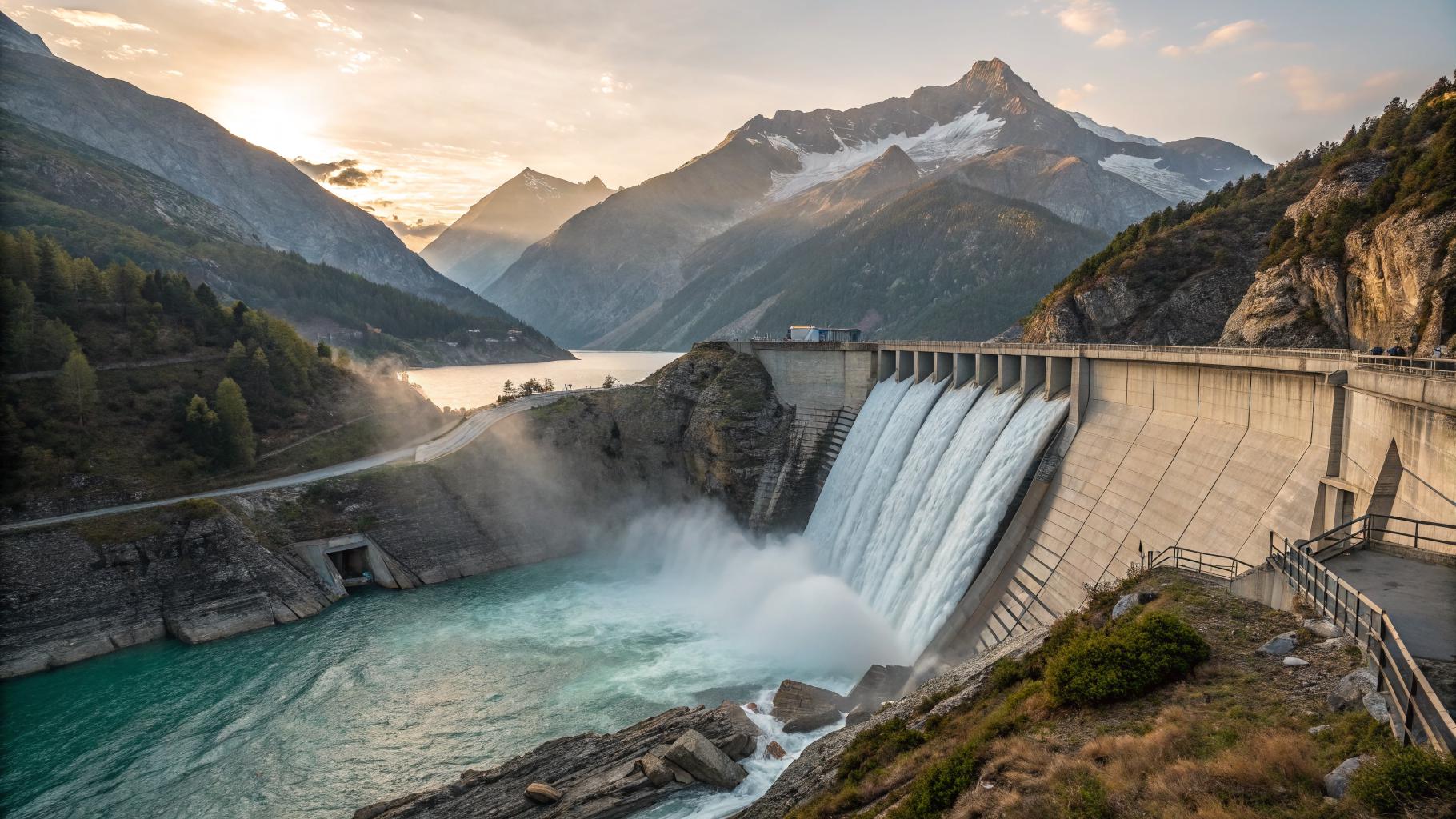
I spent weeks researching hydropower for a complete breakdown. Key findings:
– 95% efficiency → the highest of ANY electricity generation technology
– 99% of global electricity storage relies on pumped hydro (PSP)
– France produced 75.1 TWh in 2024 → record since 2013
– A single 3.5 MW Alpine plant powers 6,500 households/year
– Hydropower plants last 100+ years with minimal maintenance
The article covers:
→ How hydroelectric plants actually work (the full conversion chain)
→ The 5 types of hydro plants (run-of-river, reservoir, pumped storage,
small hydro, hydrokinetic)
→ The 3 turbine technologies (Pelton, Francis, Kaplan) and when to use each
→ Why pumped storage is the unsung hero of the energy transition
→ Cost breakdown: €20 to 250/MWh depending on the project
→ Environmental impacts — both global and local
Full guide here:
https://amsyenergy.com/en/hydropower-guide-2026/
Interested in r/energy's perspective:
What's holding back further hydropower development in your country?
Is it environmental concerns, lack of suitable sites, or political decisions?
Source: Which-Willingness559
17 Comments
Most of the high yield sites are developed already. At thr same time in a lot of countries environmental consciousness has probably made developing similar mega sites less straight forward,due to enormous environmental impact of flooding large areas.
I am happy to get fact checked on thst but I would expect also a LOT less investment going into the sector. Partly because of a slower development pace as mentioned above, partly because those projects have a much longer repayment period as they are often planned to operate for 100+ years.
Also in more recent years more and more periods with draught have hit their capacity factor as well, at least in Northern Europe.
Hydro doesn’t have much potential to expand. It relies on mountain terrain, and much of the best potential has been developed as much as a century ago. Solar and wind get all the attention because you can build them almost anywhere, and the potential to scale up is enormous. They will overtake hydro, and batteries will overtake pumped hydro for the same reason.
Lack of suitable sites.
“Two weeks of research” didn’t explain this?
In many cases the methane released by biomass under the reservoir is a significant climate problem.
In the US most hydropower was built in the early 20th century. A lot them are either too old and needing retirement, so silted up that their capacity is down, or facing declining river levels from droughts. Beyond that their impact on ecosystems is extensive, salmon impacts have killed a lot of them.
If you’re trying to build one today, at least in the US, they are expensive, impossible to permit, and you have to find a bunch of land to flood. Plus you have sediment impacts at the river exit, look at how much beach was made when the Elwha dams came down.
Really it’s the type of project only central governments can push through, and that’s not particularly popular these days. Most renewable development in the US is funded by tech companies
Every dam will fail. It’s just a question of when and how.
Hydroelectric is a vastly more practical and efficient energy storage solution compared to batteries
So much effort goes into generating more energy.
I wish more effort was put into being more efficient with the energy we have.
Which brings us back to Trump.
Exhibit A
Regulatory Rollback: In 2019, the Trump administration blocked a rule meant to phase out older incandescent bulbs, aiming to “protect consumer choice” and avoid expensive new requirements.
Exhibit B
https://www.canarymedia.com/articles/energy-efficiency/trump-energy-star-liheap-building
Seems sort of obvious, no? Hydropower is great but adding more of it is the problem. It requires the right geology/topography, and the will to create huge significant environmental and sometimes cultural destruction. You can build solar and to some extent wind almost anywhere. Relative to flooding valleys to create dams, it’s dirt cheap and has almost no environmental impact.
The problem with hydropower is we have largely maxed out our capacity already
To have hydropower, you need large volume rivers and areas that can be flooded by dams. These locations are very limited around the world and we have already built at most of them.
Seems like you missed the important parts like ecosystem damage, cultural destruction, methane release and negative effects on fish populations.
Increase in hydropower capacity is mostly done by upgrading existing facilities.
Drilling (or re-drilling) tunnels to get smoother water flow, new and improved turbines and so on.
We talk about it a lot here in the northwest. It’s got huge pluses and minuses
Between the lack of suitable sites and environmental concerns, dammed hydropower is in slow decline. Run-of-the-river hydro shows promise for growth, buts its rather small bore.
Because it’s not going to solve the problem. Almost all available hood hydropower sites are taken. There’s no room to grow to cover demand that uses fossil fuels. That isn’t true of wind and solar.
Hopefully one day the Trompe makes a comeback. Compressed air, passively generated, minimal environmental impact. Much better than damming rivers.
Almost all of the good hydro sites are dammed already. The growth for it is low and will not improve.
There isn’t much to talk about – Hydropower capacity possible without massive costs/massive environmental damage has been maxed out in most develoiped countries long ago.
Same can not be said for Wind and Solar.