Trump wants a French-style triumphal arch, but does he even know its history?
The American president wants to build his own triumphal arch in Washington and promises it will “far surpass” the one in Paris. For The New York Times, this is an opportunity to revisit the history of the French Arc, designed by Napoleon and now symbolizing “the fragility of leaders’ status and ambition.”
The New York Times
Although he regularly disparages France in matters of war and trade, President Donald Trump does not shy away from appropriating its culture. Last year, he organized a military parade inspired by the Bastille Day celebrations he attended in 2017 at the invitation of President Emmanuel Macron. And now he is calling for the construction of a triumphal arch in Washington which, among other things, he wants to outshine the one in Paris. The proposal has prompted weary reactions in France, a country that has already had its fill of leaders afflicted with architectural grandiosity.
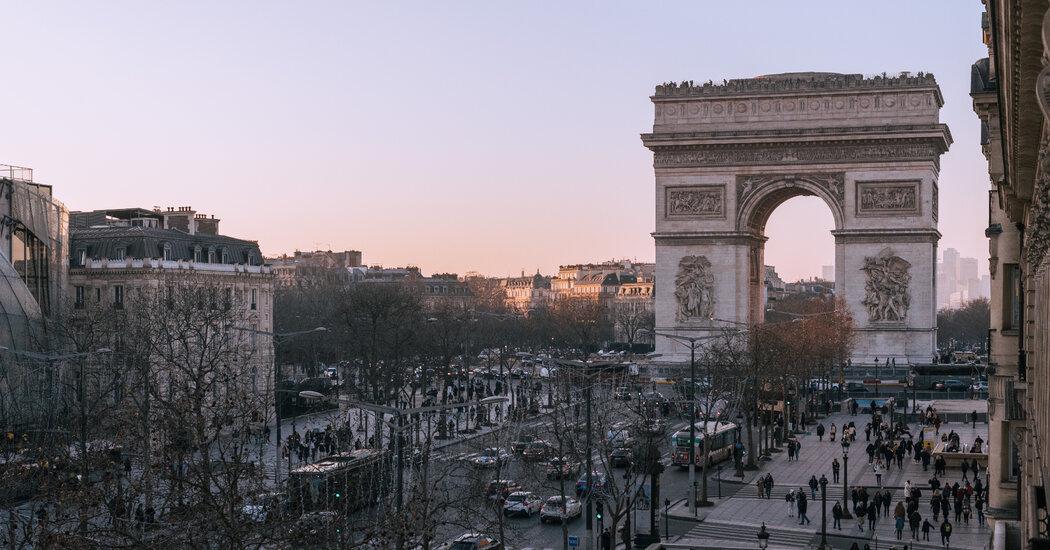
The matter is also an opportunity to take a fresh look at the Arc de Triomphe and its difficult history, one that might remind Trump both of the fleeting nature of power and of the controversial legacy of monuments. Conceived in 1806 by Napoleon as a tribute to military glory after the Battle of Austerlitz, the Arc de Triomphe eventually came to symbolize very different things in modern France. It houses the sacred Tomb of the Unknown Soldier, served as a festive gathering point for football fans after France’s victory in the 2018 World Cup, and became a hated target for protesters from the “Yellow Vest” movement, who vandalized it later that same year. The arch crowning the Champs-Élysées “embodies our joys, our sorrows, and also our anger,” explains historian Jean-Yves Le Naour.
“All they have is history”
What it does not overtly embody anymore is Napoleon himself. In 1814, when the emperor was defeated for the first time and forced into exile, construction was halted for nearly ten years. It was under Louis-Philippe, a king who advocated reconciliation, that the project was completed in 1836, and the monarch decreed that the monument should honor not only Napoleon’s imperial army but also all those who fought for France between 1792 and 1815.
Commemorating the various chapters of France’s turbulent history through the sculptures adorning the Arc was no simple task, especially since Napoleon ultimately ended up crushed at Waterloo. “We inaugurated a triumphal arch for a defeated nation,” comments Isabelle Rouge-Ducos, a scholar specializing in 19th-century art.
By deciding after the First World War to honor an unidentified soldier by burying him beneath the Arc, France once again transformed the monument. Once merely “grandiose, [it is now] breathtaking,” says Gabriel Wick, an art historian at New York University who lives in Paris. “Every time I go there, I feel as though I’m standing in the nave of a cathedral, but without an altar.”
Trump seems less concerned with the ghosts of the past than with boasting that he built the biggest triumphal arch. At 76 meters tall, including a kind of winged Statue of Liberty at its summit, his version would far surpass the Arc de Triomphe and its 49.5 meters, overshadowing its history-laden predecessor. “The one people know best is the Arc de Triomphe in Paris, France, and we’re going to top it by a lot, I think,” Trump told supporters in December 2025. “All they have is history.”
A history that should give him pause, because it illustrates the fragility of leaders’ status and ambition. After seeing the pyramids of the pharaohs during his invasion of Egypt in 1798, at the head of an army of about 36,000 men, Napoleon developed the desire to build a colossal monument, explains Isabelle Rouge-Ducos. French commentators often use the word “pharaonic” to describe Trump’s projects. During a recent morning radio program, host Sonia Devillers pointed out that Trump was also building a gigantic ballroom adjoining the White House and wondered whether his architectural tastes resembled those of a dictator.
Others compare him to Saudi Crown Prince Mohammed bin Salman, whose dream of a city more than 170 kilometers long in the desert now appears to be bogged down, and to Nicolae Ceaușescu, the Romanian dictator who built an enormous monstrosity the size of the Pentagon to house a subservient parliament, before being overthrown and executed in 1989.
Still, Trump’s taste for grandeur is hardly unusual in France. Long after Napoleon, French presidents sought to leave behind buildings symbolizing their legacy. In the late 1960s, Georges Pompidou supported the museum that bears his name, a futuristic cultural center. In the 1980s, François Mitterrand launched the Louvre Pyramid, designed by architect I. M. Pei.
Mitterrand was also behind the Grande Arche de la Défense, a titanic postmodern cube standing among the skyscrapers of a business district west of Paris. It was inaugurated in 1989 for the bicentennial of the French Revolution, just as Trump’s arch is supposed to celebrate the 250th anniversary of American independence.
At 110 meters high, Mitterrand’s arch is even larger than Trump’s project. The U.S. president, who may have glimpsed the monumental structure from the Arc de Triomphe while attending the 2017 parade, made no mention of it. The difference, Le Naour notes, is that the Grande Arche was dedicated to the defense of human rights. He adds that building a triumphal arch like the one Trump envisions would be unthinkable in France.
“In France, it makes us laugh a little, but behind it there’s a message,” says Le Naour. “He glorifies strength. Maybe soon there will also be a Russian triumphal arch.”
— Mark Landler
choppytehbear1337 on
You want to know who else wanted an arch bigger than the one in France? Hitler. Not joking.
AdFeeling842 on
and it will no doubt look like some tacky casino entrance suited for somewhere like las vegas
Michael_Schmumacher on
Pretty insulting to Napoleon, if you ask me. That guy was highly competent.
Reasonable-Growth112 on
A triumphal arc supposes there is a triumph somewhere..
What glory Trump brought to America exactly ?
SomeBloke on
What a little man
snipthia on
We are the ugly American
TheBlack2007 on
Oh, just wait what the Germans compare it to. Spoilers: it’s not the Brandenburg Gate.

11 Comments
Trust me, it’s not just France….
Trump wants a French-style triumphal arch, but does he even know its history?
The American president wants to build his own triumphal arch in Washington and promises it will “far surpass” the one in Paris. For The New York Times, this is an opportunity to revisit the history of the French Arc, designed by Napoleon and now symbolizing “the fragility of leaders’ status and ambition.”
The New York Times
Although he regularly disparages France in matters of war and trade, President Donald Trump does not shy away from appropriating its culture. Last year, he organized a military parade inspired by the Bastille Day celebrations he attended in 2017 at the invitation of President Emmanuel Macron. And now he is calling for the construction of a triumphal arch in Washington which, among other things, he wants to outshine the one in Paris. The proposal has prompted weary reactions in France, a country that has already had its fill of leaders afflicted with architectural grandiosity.
The matter is also an opportunity to take a fresh look at the Arc de Triomphe and its difficult history, one that might remind Trump both of the fleeting nature of power and of the controversial legacy of monuments. Conceived in 1806 by Napoleon as a tribute to military glory after the Battle of Austerlitz, the Arc de Triomphe eventually came to symbolize very different things in modern France. It houses the sacred Tomb of the Unknown Soldier, served as a festive gathering point for football fans after France’s victory in the 2018 World Cup, and became a hated target for protesters from the “Yellow Vest” movement, who vandalized it later that same year. The arch crowning the Champs-Élysées “embodies our joys, our sorrows, and also our anger,” explains historian Jean-Yves Le Naour.
“All they have is history”
What it does not overtly embody anymore is Napoleon himself. In 1814, when the emperor was defeated for the first time and forced into exile, construction was halted for nearly ten years. It was under Louis-Philippe, a king who advocated reconciliation, that the project was completed in 1836, and the monarch decreed that the monument should honor not only Napoleon’s imperial army but also all those who fought for France between 1792 and 1815.
Commemorating the various chapters of France’s turbulent history through the sculptures adorning the Arc was no simple task, especially since Napoleon ultimately ended up crushed at Waterloo. “We inaugurated a triumphal arch for a defeated nation,” comments Isabelle Rouge-Ducos, a scholar specializing in 19th-century art.
By deciding after the First World War to honor an unidentified soldier by burying him beneath the Arc, France once again transformed the monument. Once merely “grandiose, [it is now] breathtaking,” says Gabriel Wick, an art historian at New York University who lives in Paris. “Every time I go there, I feel as though I’m standing in the nave of a cathedral, but without an altar.”
Trump seems less concerned with the ghosts of the past than with boasting that he built the biggest triumphal arch. At 76 meters tall, including a kind of winged Statue of Liberty at its summit, his version would far surpass the Arc de Triomphe and its 49.5 meters, overshadowing its history-laden predecessor. “The one people know best is the Arc de Triomphe in Paris, France, and we’re going to top it by a lot, I think,” Trump told supporters in December 2025. “All they have is history.”
A history that should give him pause, because it illustrates the fragility of leaders’ status and ambition. After seeing the pyramids of the pharaohs during his invasion of Egypt in 1798, at the head of an army of about 36,000 men, Napoleon developed the desire to build a colossal monument, explains Isabelle Rouge-Ducos. French commentators often use the word “pharaonic” to describe Trump’s projects. During a recent morning radio program, host Sonia Devillers pointed out that Trump was also building a gigantic ballroom adjoining the White House and wondered whether his architectural tastes resembled those of a dictator.
Others compare him to Saudi Crown Prince Mohammed bin Salman, whose dream of a city more than 170 kilometers long in the desert now appears to be bogged down, and to Nicolae Ceaușescu, the Romanian dictator who built an enormous monstrosity the size of the Pentagon to house a subservient parliament, before being overthrown and executed in 1989.
Still, Trump’s taste for grandeur is hardly unusual in France. Long after Napoleon, French presidents sought to leave behind buildings symbolizing their legacy. In the late 1960s, Georges Pompidou supported the museum that bears his name, a futuristic cultural center. In the 1980s, François Mitterrand launched the Louvre Pyramid, designed by architect I. M. Pei.
Mitterrand was also behind the Grande Arche de la Défense, a titanic postmodern cube standing among the skyscrapers of a business district west of Paris. It was inaugurated in 1989 for the bicentennial of the French Revolution, just as Trump’s arch is supposed to celebrate the 250th anniversary of American independence.
At 110 meters high, Mitterrand’s arch is even larger than Trump’s project. The U.S. president, who may have glimpsed the monumental structure from the Arc de Triomphe while attending the 2017 parade, made no mention of it. The difference, Le Naour notes, is that the Grande Arche was dedicated to the defense of human rights. He adds that building a triumphal arch like the one Trump envisions would be unthinkable in France.
“In France, it makes us laugh a little, but behind it there’s a message,” says Le Naour. “He glorifies strength. Maybe soon there will also be a Russian triumphal arch.”
— Mark Landler
You want to know who else wanted an arch bigger than the one in France? Hitler. Not joking.
and it will no doubt look like some tacky casino entrance suited for somewhere like las vegas
Pretty insulting to Napoleon, if you ask me. That guy was highly competent.
A triumphal arc supposes there is a triumph somewhere..
What glory Trump brought to America exactly ?
What a little man
We are the ugly American
Oh, just wait what the Germans compare it to. Spoilers: it’s not the Brandenburg Gate.
https://en.wikipedia.org/wiki/Germania_(city)?wprov=sfti1
Pretty sure Napolean was a much more successful tyrant than Trump- it still feels like the NYT is glazing Trump here
Napoleon had a Trump complex, also, he was a prophet.