Eight independent MPs led by Allegra Spender have called on the federal government to index income tax thresholds to inflation, a major challenge ahead of an election in which both sides are using bracket creep to fund their promises.
The letter signed by Spender, Helen Haines, Sophie Scamps and the five other teal independent MPs elevates the issue of tax reform ahead of an election due by May 17, which could return a hung parliament with those MPs in the balance of power.
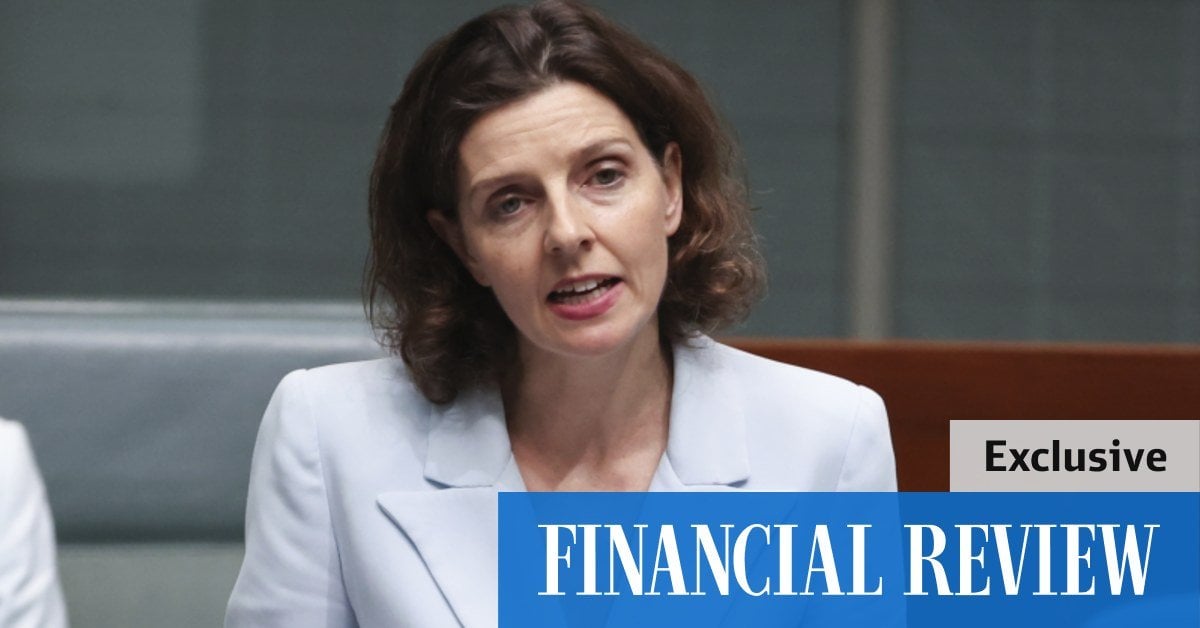
Independent MP Allegra Spender in federal parliament Sydney Morning Herald
Spender accused the major parties of a “lack of ambition for major reform” at a time when taxpayers were facing “a double whammy” of inflation raising the cost of living and pushing incomes into higher tax brackets “so your money is worth less but taxed more”.
The tax reform plan would see all income tax brackets indexed either to inflation or a flat 2.5 per cent every year, the mid-range of the Reserve Bank’s target inflation rate, as advocated by former RBA assistant governor Luci Ellis.
Spender wants this to be agreed to first before determining what combination of spending cuts or other tax reform should be used to pay for it. On costings, she said that assuming tax brackets for the 2024-25 fiscal year were indexed at the most recent RBA forecast for inflation of 2.4 per cent, the policy would have cost the budget $3.5 billion this year.
“Assuming wed indexed tax brackets for the 2024-25 fiscal year at the most recent RBA forecast for inflation (2.4% to June 25) it would cost the budget $3.5 billion this year.”
In a letter to the Treasurer Jim Chalmers, the independents noted the “average Australian is on a higher rate of marginal tax than almost any other time in our history”.
“Without change, by 2035, Australian workers will be responsible for more than 46 per cent of the federal government’s total revenue, up from around 38 per cent in the 2000s,” they warned.
“Over the post-COVID period, bracket creep has been responsible for a much larger reduction in household disposable incomes than the increase in interest payable on mortgages and other loans.
“Through bracket creep, the government automatically grows the tax take over time, reducing the pressures on government to exercise fiscal responsibility.”
Indexing tax brackets would “protect the wages of future generations of Australian workers while removing the bracket creep safety net which governments of both sides fall back on to raise revenue”, they said.
In Labor’s first term, the Albanese government redistributed the Coalition’s stage three tax cuts, halving the benefit for those earning more than $200,000 from $9075 to $4529 while doubling the benefit to a person on the average wage of $73,000, delivering about $1500 a year more in tax relief.
Stage three wipe out
Despite the changes, the Parliamentary Budget Office warned in November that the benefits are set to be wiped out by 2030, when the average income tax rate will return to 26 per cent and continue to rise as the budget becomes increasingly reliant on the income tax raised from bracket creep.
Opposition Leader Peter Dutton has walked away from the Coalition’s pledge for further tax cuts for about 1.1 million high-income earners, with no plans to announce a policy before the election.
On February 25, Prime Minister Anthony Albanese declined to say if Labor would address bracket creep if re-elected, answering repeated questions about whether growing income tax is funding election promises by describing his $8.5 billion Medicare promise as an “investment” and attacking the Coalition for plans to make public service cuts.
Spender told The Australian Financial Review the major parties had “a lot of announcements right now with very big price tags”.
“People have to be honest: this isn’t free. Spending commitments will be paid for to a significant degree by bracket creep, effectively an increased tax on working Australians.”
Spender said she was “certain” the tax policy would be a focus in the event of a hung parliament, because “this is the sort of discipline that people across the political spectrum are seeking right now” from government.
Scamps said that taxpayers “100 per cent will be” paying for election pledges in higher tax and indexation is “something that definitely should be looked at”.
Kate Chaney, the member for Curtin, said “we rely too heavily on taxing workers and freezing tax brackets is the simplest way to stop this from continuing to grow”.
Zoe Daniel, the member for Goldstein, said bracket creep was “a drag on the lives and livelihoods of working Australians who constantly find themselves paying more tax without seeing a commensurate improvement in their standard of living”.
Economists including Steven Hamilton and Chris Richardson have noted Australia’s increasing reliance on income tax to repair the budget, with the latter arguing Labor’s extra spending in its first term had delayed income tax cuts by five or six years.
In February, former Treasury boss Ken Henry said the government should consider indexing income tax thresholds, putting him at odds with Treasury secretary Steven Kennedy who last year argued bracket creep had helped slow inflation.
Deadly_Accountant on
While this sounds reasonable – it will never be reality.
Prestigious-Gain2451 on
I think that’s reasonable.
Why go through the charade every so often of moving them when we can just automatically have them adjust.
Oh wait that would take away the cash grab from inflation and the look at me moment
champppppppppppp on
Long overdue, it’s a bit disturbing how governments abuse the public’s lack of economic literacy to discreetly raise taxes every year.
Street_Buy4238 on
Yes!
Finally, some sound reform! This will force the government to be more accountable for spending as they can’t just rely on inflation to increase the tax take YoY.

6 Comments
Paywall
Eight independent MPs led by Allegra Spender have called on the federal government to index income tax thresholds to inflation, a major challenge ahead of an election in which both sides are using bracket creep to fund their promises.
The letter signed by Spender, Helen Haines, Sophie Scamps and the five other teal independent MPs elevates the issue of tax reform ahead of an election due by May 17, which could return a hung parliament with those MPs in the balance of power.
Independent MP Allegra Spender in federal parliament Sydney Morning Herald
Spender accused the major parties of a “lack of ambition for major reform” at a time when taxpayers were facing “a double whammy” of inflation raising the cost of living and pushing incomes into higher tax brackets “so your money is worth less but taxed more”.
The tax reform plan would see all income tax brackets indexed either to inflation or a flat 2.5 per cent every year, the mid-range of the Reserve Bank’s target inflation rate, as advocated by former RBA assistant governor Luci Ellis.
Spender wants this to be agreed to first before determining what combination of spending cuts or other tax reform should be used to pay for it. On costings, she said that assuming tax brackets for the 2024-25 fiscal year were indexed at the most recent RBA forecast for inflation of 2.4 per cent, the policy would have cost the budget $3.5 billion this year.
“Assuming wed indexed tax brackets for the 2024-25 fiscal year at the most recent RBA forecast for inflation (2.4% to June 25) it would cost the budget $3.5 billion this year.”
In a letter to the Treasurer Jim Chalmers, the independents noted the “average Australian is on a higher rate of marginal tax than almost any other time in our history”.
“Without change, by 2035, Australian workers will be responsible for more than 46 per cent of the federal government’s total revenue, up from around 38 per cent in the 2000s,” they warned.
“Over the post-COVID period, bracket creep has been responsible for a much larger reduction in household disposable incomes than the increase in interest payable on mortgages and other loans.
“Through bracket creep, the government automatically grows the tax take over time, reducing the pressures on government to exercise fiscal responsibility.”
Indexing tax brackets would “protect the wages of future generations of Australian workers while removing the bracket creep safety net which governments of both sides fall back on to raise revenue”, they said.
In Labor’s first term, the Albanese government redistributed the Coalition’s stage three tax cuts, halving the benefit for those earning more than $200,000 from $9075 to $4529 while doubling the benefit to a person on the average wage of $73,000, delivering about $1500 a year more in tax relief.
Stage three wipe out
Despite the changes, the Parliamentary Budget Office warned in November that the benefits are set to be wiped out by 2030, when the average income tax rate will return to 26 per cent and continue to rise as the budget becomes increasingly reliant on the income tax raised from bracket creep.
Opposition Leader Peter Dutton has walked away from the Coalition’s pledge for further tax cuts for about 1.1 million high-income earners, with no plans to announce a policy before the election.
On February 25, Prime Minister Anthony Albanese declined to say if Labor would address bracket creep if re-elected, answering repeated questions about whether growing income tax is funding election promises by describing his $8.5 billion Medicare promise as an “investment” and attacking the Coalition for plans to make public service cuts.
Spender told The Australian Financial Review the major parties had “a lot of announcements right now with very big price tags”.
“People have to be honest: this isn’t free. Spending commitments will be paid for to a significant degree by bracket creep, effectively an increased tax on working Australians.”
Spender said she was “certain” the tax policy would be a focus in the event of a hung parliament, because “this is the sort of discipline that people across the political spectrum are seeking right now” from government.
Scamps said that taxpayers “100 per cent will be” paying for election pledges in higher tax and indexation is “something that definitely should be looked at”.
Kate Chaney, the member for Curtin, said “we rely too heavily on taxing workers and freezing tax brackets is the simplest way to stop this from continuing to grow”.
Zoe Daniel, the member for Goldstein, said bracket creep was “a drag on the lives and livelihoods of working Australians who constantly find themselves paying more tax without seeing a commensurate improvement in their standard of living”.
Economists including Steven Hamilton and Chris Richardson have noted Australia’s increasing reliance on income tax to repair the budget, with the latter arguing Labor’s extra spending in its first term had delayed income tax cuts by five or six years.
In February, former Treasury boss Ken Henry said the government should consider indexing income tax thresholds, putting him at odds with Treasury secretary Steven Kennedy who last year argued bracket creep had helped slow inflation.
While this sounds reasonable – it will never be reality.
I think that’s reasonable.
Why go through the charade every so often of moving them when we can just automatically have them adjust.
Oh wait that would take away the cash grab from inflation and the look at me moment
Long overdue, it’s a bit disturbing how governments abuse the public’s lack of economic literacy to discreetly raise taxes every year.
Yes!
Finally, some sound reform! This will force the government to be more accountable for spending as they can’t just rely on inflation to increase the tax take YoY.
Love it.
Sooooooo how do I vote for this?