
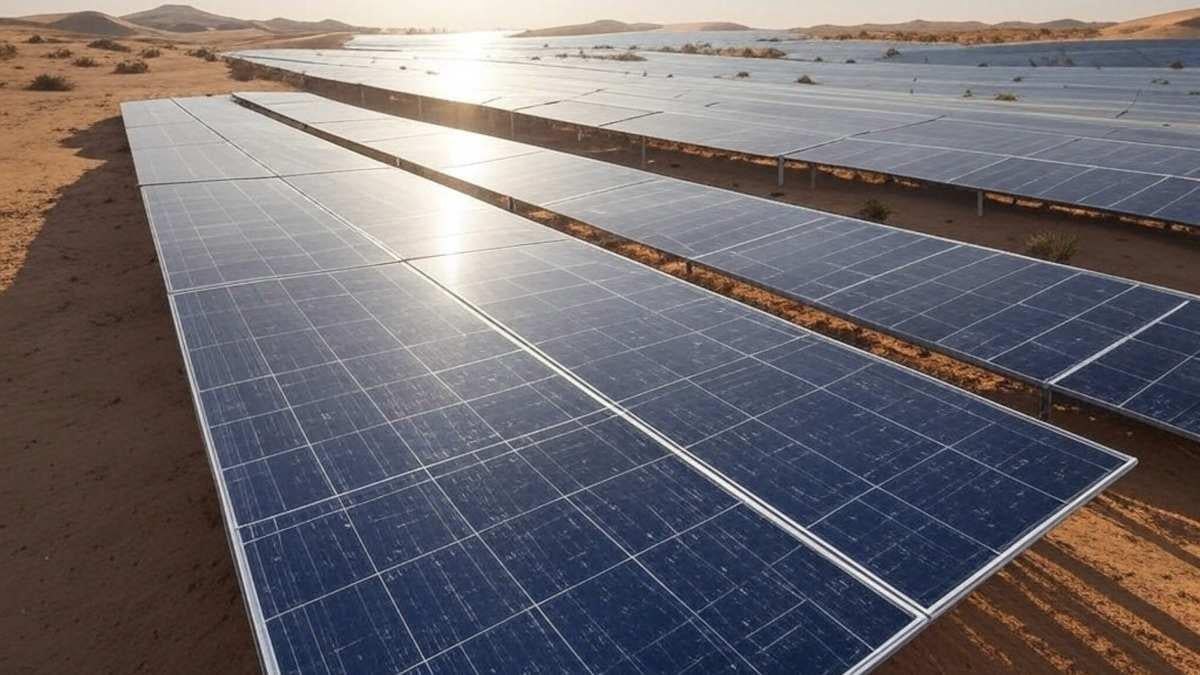
I came across this article about China’s massive solar farms in desert regions. While they’re generating huge amounts of renewable energy, researchers say the ecosystems are being irreversibly transformed. Some reports suggest improved soil moisture and plant growth under the panels, but others warn that altering desert environments could have unpredictable long-term consequences.
Website Link: https://glassalmanac.com/china-confirms-solar-panels-in-deserts-irreversibly-transform-ecosystems/
It made me wonder: are we overlooking the environmental trade-offs of large-scale renewable projects? Could solar farms in deserts actually become a model for eco-restoration, or are we risking fragile ecosystems for short-term climate goals?
Source: SideDecent652
5 Comments
We’re overlooking the global environmental catastrophe of increasing CO2.
Short term climate goals? was this written by an oil exec…. Transforming to a renewable energy economy will outlast every one alive today, just as the oil economy did when it started. Not short term, until we have fusion power on scale, if ever, we need alternatives from fossil fuel.
No amount of *even remotely conceivable* changes by having a bunch of solar panels would be worse than keep pumping greenhouse gases into the atmosphere. If anything the changes for PV are local while those for fossil fuels are global.
To put it bluntly: If we don’t shift over *now* then there won’t be an ecosphere to worry about (and it may already be too late so currently we’re just hoping and praying that it might still work out)
FUD.
If these claims were true (on the scale PV is deployed in deserts), then also all desert greening projects, to reclaim arible soil and land from deserts, making deserts green again, would create the same ‚environment desasters‘.
Yet nobody complains about desert greening (heck, people love it!), but PV is ‚of the devil‘ for idiots like OP.
Large-scale solar farms, especially in sensitive desert ecosystems, definitely come with complex trade-offs. On one hand, they provide massive clean energy that’s crucial for reducing carbon emissions and combating climate change. On the other, as you mentioned, they can alter soil composition, local flora, and fauna in ways we don’t fully understand yet.
Some studies showing improved soil moisture and plant growth under panels suggest there might be potential for these installations to aid in eco-restoration, perhaps by creating microclimates that support certain vegetation. But the risk of disrupting fragile desert ecosystems is real and should not be underestimated.
I think this highlights the importance of careful site selection, ongoing environmental monitoring, and integrating ecological expertise into renewable energy planning. It’s also a reminder that no solution is without impact, so balancing climate goals with ecosystem preservation is key.