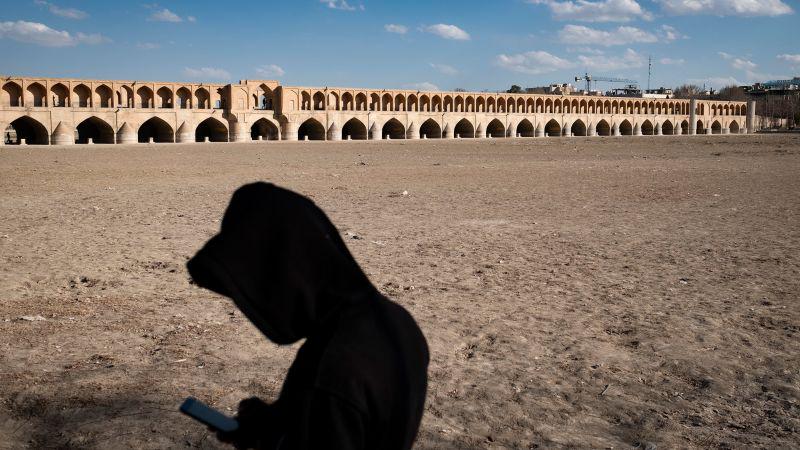
Iran’s current drought is the worst for at least 40 years and water levels are shrinking “at a time of year when you would normally expect storage to be recovering, not collapsing further,” said Amir AghaKouchak, professor of civil and environmental engineering at the University of California, Irvine.
Iran, a mostly semi-arid country, is no stranger to water shortages, but rarely have they affected Tehran, home to most of the country’s rich and powerful.

1 Comment
[The roots of Iran’s water woes](https://www.cnn.com/2025/12/01/climate/iran-water-crisis-evacuate-tehran?utm_medium=social&utm_campaign=missions&utm_source=reddit) echo those in many other parts of the world: decades of over-extraction; aging, leaky infrastructure; a proliferation of dams erected across rivers; mismanagement; accusations of corruption. Through it all runs the thread of climate change, driving hotter, drier weather, meaning year after year, dried-out reservoirs are not replenished.
Iran’s current drought is the worst for at least 40 years and water levels are shrinking “at a time of year when you would normally expect storage to be recovering, not collapsing further,” said Amir AghaKouchak, professor of civil and environmental engineering at the University of California, Irvine.
Iran, a mostly semi-arid country, is no stranger to water shortages, but rarely have they affected Tehran, home to most of the country’s rich and powerful.
The main reservoirs supplying the city are only around 11% full, according to Mohsen Ardakani, the director general of the Tehran Provincial Water and Sanitation Authority, as [reported](https://www.mehrnews.com/news/6647359/%D8%A2%D8%A8%D9%81%D8%A7-%D8%B0%D8%AE%DB%8C%D8%B1%D9%87-%D8%B3%D8%AF%D9%87%D8%A7%DB%8C-%D8%AA%D9%87%D8%B1%D8%A7%D9%86-%D8%A8%D9%87-%DB%B5-%D8%AF%D8%B1%D8%B5%D8%AF-%D8%B1%D8%B3%DB%8C%D8%AF) by Iran’s semi-official Mehr News Agency earlier this month.
Sefidrud Dam, near Manjil in northern Iran, on November 10, 2024 and on November 20, 2025. *European Space Agency*
The Latyan Dam, around 15 miles outside the city, is [only about 9% full](https://www.tasnimnews.com/fa/news/1403/12/19/3272240/%D8%AE%D8%B4%DA%A9%D8%B3%D8%A7%D9%84%DB%8C-%D8%A8%D9%87-%D8%B3%D8%AF-%D9%84%D8%AA%DB%8C%D8%A7%D9%86-%D8%B1%D8%B3%DB%8C%D8%AF-91-%D8%AF%D8%B1%D8%B5%D8%AF-%D9%85%D8%AE%D8%B2%D9%86-%D8%B3%D8%AF-%D8%AE%D8%A7%D9%84%DB%8C-%D8%A7%D8%B3%D8%AA). Since May, the reservoir, nestled in the foothills of the Alborz mountains, has receded so much it has left an almost entirely dry riverbed in its wake, etched with just a few trickling streams.