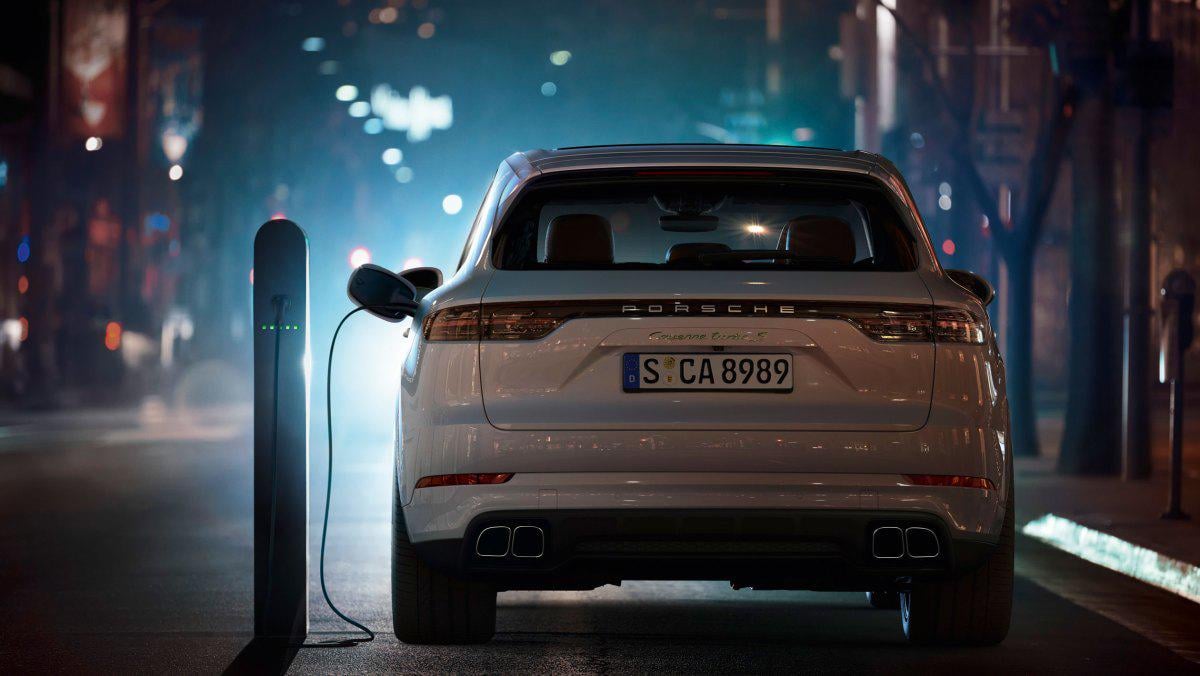
Exclusive: It’s time to pull the plug on plug-in hybrids. A new study shows that PHEVs seldom deliver on their efficiency promises. PHEVs have been touted as a way to ease cautious consumers into full EVs. Meanwhile, EV charging networks continue to expand.
Source: mafco

22 Comments
By “pull the plug” do you mean plug-in hybrids should be banned?
I have owned four EVs, so I understand their advantages and am a strong supporter. My son has a Hyundai Elantra hybrid (not PHEV) and regularly gets 50+ mpg over the course of using a tank of gas. I rented a Honda Accord hybrid (not PHEV) and averaged around 50 mpg over a week. So regular hybrid seems to work well and there is zero downside as an owner / operator.
I have also rented a Chrysler Pacifica mini-van that was PHEV for a road trip with a group of people. It only accepts L2 charging, so it was a pain to find a place and have it sit for a couple of hours. Then the EV benefit was only about 15 miles. All-in-all I don’t “get” PHEV. The juice is not worth the squeeze and I actually think it would turn people off from considering a BEV because of the L2 charging experience.
We have electricity in most houses, so, what network needs to expand? People who parks I’m the city are always close to a charger. People in the rural, countryside, drive to town , where there is a charger. They sleep at night and start every morning fully charged. Wake up to reality!
It’s a shame that it’s likely due to user knowledge, behaviors, and change management.
One question I would ask is: what % of those people don’t have at home charging capability?
Many people bought PHEVs for perks such as HOV lane access and were likely sold on the utopian idea that even if they did not have at home charging that they could charge at the store, etc. that’s not happening.
It’s about behavior- people aren’t plugging them in. Why? Most allows 110v standard outlet charging that would be more than enough for home use wit an extension charging cable (not recommending standard extension cables here people).
In summary I think the article should read: no one is plugging in their plug in hybrids
I loved mine. Charged overnight at home, and most of my driving was all electric.
The problem with ev charging on the road is that it’s more expensive than gas in most places.
The PHEV concept isnt the problem, the execution is. Most PHEVs just shoehorn a battery and motor in with a complex ICEV. It becomes the worst of both worlds. I think EREVs will do a much better job and are more feasible now with battery prices coming down.
It’s too bad. It’s also a lack of education and knowledge. They are not great for every use case but can be fantastic for many use cases.
I live in a small city, my commute is 12 miles each way and our in town driving is around the same distances. So our PHEV runs 90% as a EV while in town. And then for road trips it’s an easy efficient hybrid.
I’ve been driving them for 6 years. Just redid some calculations and I’m up to approx $25k in fuel costs saved, including my cost of electricity, which is very cheap.
Once energy density goes up and costs come down a little more, I’ll switch to a full BEV. Right now a mid size SUV with all wheel drive with enough range is still too expensive.
I have a chevy volt, and it works well. My next car will be an EV, but this has been a fantastic car, and I’d say I’m 90% electric (I’ve done a few longer trips and that did need fuel).
I dunno. My Rav4Prime still delivers 38 mpg in hybrid mode if I don’t charge it. That’s only 1 mpg worse than the regular hybrid that weighs 800 pounds less.
But, of course I charge it every night.
It’s not the technology, it’s the users. There are some weak sauce PHEVs out there for hybrid efficiency, but you still get real usable miles on a charge.
Wait . . . we bought a 2020 Toyota Corolla Hybrid. It gets close to 50 mpg, a big improvement over my 2023 gas Corolla that might get 35 mpg combined. This is an undeniable and significant increase in efficiency. Not to mention that hybrids cut emissions by around 90% over conventional internal combustion cars (because the engines are only running within their most efficient rpms and load burden, I think).
I do disagree with this on the principle that I am a Canadian and we get regular snowstorms here that could freeze a battery. Not to mention, for a lot of the more northern communities or people who go to the countryside to ski, you’d want the option to take extra gas with you in case you run out of power.
I live near Detroit and have friends that work for major car companies, American and Japanese. They say the plug in hybrids are they way to go. They are cheaper than full EVs and don’t have the range or cold weather issues the full EVs do. Like others said when they are designed new to be plug in hybrids they do very well.
Been seeing a lot of these oil company propaganda “articles” posted lately…
Living in New England, it’s more expensive to charge the battery via the grid on a PHEV than it is to use it as a hybrid.
Gas is cheap enough and electricity is expensive enough where there’s no point in buying a PHEV in much of the country.
Much of this was due to federal incentives for PHEVs that led rental companies and fleet buyers to get these because there was no extra cost. However, rental customers and company car drivers rarely plug them in. Yet this has nothing to do with how you or I would behave.
Personally, even if PHEV are identical in mileage to ICE, it helps people get used to and comfortable with electric powered vehicles. It also increases production of motors and batteries helping drive down costs and spur innovation.
Down the line everyone will drive electric when they drive.
This smells like fossil fuel propaganda.
Our Pacifica Hybrid gives us about 38mpg. A minivan. With a small fuel tank. There’s no faking the tiny amounts of gas I put in the tank. I haven’t personally looked into the study behind that article, but I read that it combined all PHEV models together to show that mileage didn’t go up as much as expected. That means the Tahoe Hybrid is in there with the new Prius and… I don’t believe that headline.
Doubt
lol
>Using that data, the Fraunhofer Institute could determine how much of that energy came from charging when plugged in. It [found that](https://www.oeko.de/fileadmin/oekodoc/Analyse_PHEV_2025_EN_final.pdf) less than a third of 1 million PHEVs in Germany plugged in either occasionally or not at all.
Germany. Household electrical power in Germany is possibly not priced like it is in the U.S. I would imagine it is more expensive for a renter or homeowner to use their own power for plugging in, while a commercial charging station may be able to buy power at a much lower rate (kind of like how we handle water in the U.S., where a farm can buy water at low prices compared to household potable water).
>One of PHEV’s many shortcomings are their anemic batteries, capable of powering the vehicle for short distances. Some can only traverse a handful of miles, while many sold in recent years can operate on battery power for about 20 to30 miles. Regulators in Europe and automakers have been proposing longer ranges for future models, hoping that a more capable battery will encourage people to charge their batteries more frequently.
Going by my hybrid Corolla, *that’s not how a hybrid uses its electricity*! I am only driving on battery in parking lots at low speed, or when in a traffic jam. All other driving is mainly powered by the gas engine with the electric motor assisting, cutting in and out of operation strategically. This ensures that the engine is operating within its most efficient range of load and RPMs most of the time, making it very efficient for fuel. When I accelerate, the electric motor assists, relieving the engine of the added load. The Corolla has a very small battery pack compared to a Prius, but gets close to the same gas mileage because of the intelligent usage.
Now, maybe a plug-in hybrid is designed to work differently from the Corolla hybrid, but I think that trying to build a case on driving range based on exclusive electrical power may be misleading and misinformative.
Why would a phev plug into charge unless convenient or forced to. Ffs hybrid has good fuel millage is the whole point.