
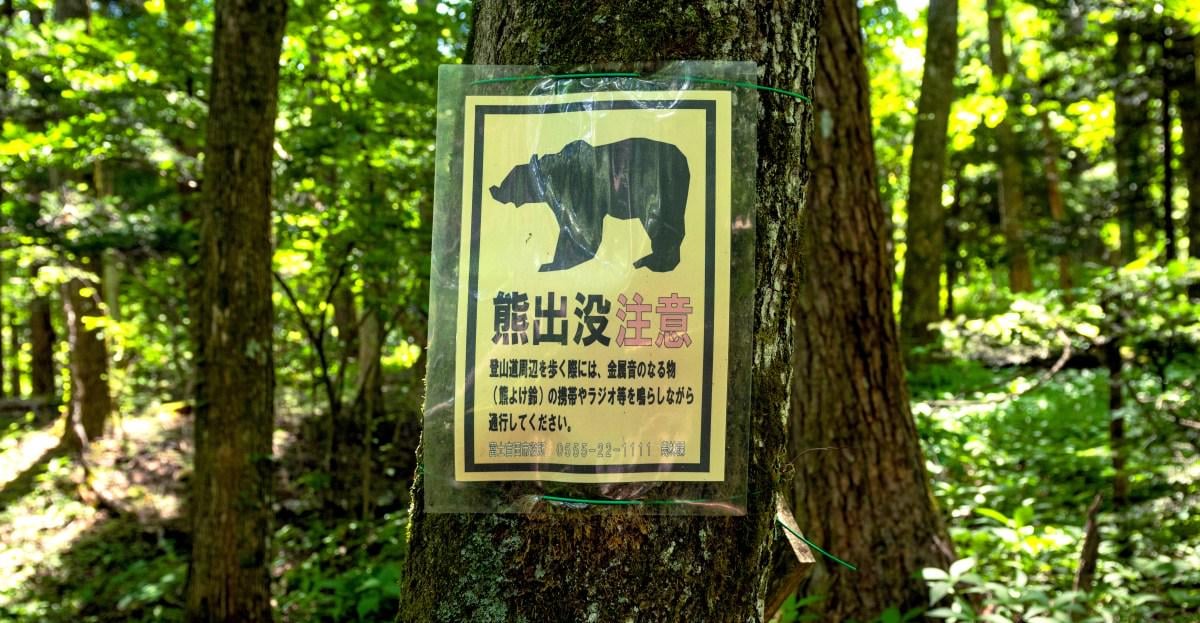
The strange reason why bears are attacking people in Japan and what it reveals about wildlife encounters in the years to come.
Source: vox
The strange reason why bears are attacking people in Japan and what it reveals about wildlife encounters in the years to come.
Source: vox
1 Comment
It’s a scene from a nightmare: You’re shopping at the supermarket on a normal fall evening, and suddenly a hungry bear walks in and starts smashing things.
This scene has become a reality in parts of Japan. Last year, in a city north of Tokyo, an adult bear entered an open grocery store, “[rampaged](https://www.cnn.com/2025/10/08/asia/japan-bear-supermarket-attac-intl-hnk)” through the sushi section, and, [according to](https://www.france24.com/en/live-news/20251008-bear-injures-two-in-japan-supermarket-man-killed-in-separate-attack) a store employee, knocked over and smashed a pile of avocados. The animal became agitated and injured two people, local officials said.
Other stories of recent bear encounters in Japan come to a more harrowing end. In October, local police in Iwate Prefecture, a region in northeastern Japan, [reported that](https://www.japantimes.co.jp/news/2025/10/10/japan/apparent-bear-attack-kills-man-in-iwate/) a man was out foraging mushrooms in the forest when he was killed by a bear. A few months earlier in a different region, a bear killed a hiker — and data from his smartwatch [later revealed](https://www.cbsnews.com/amp/news/hiker-killed-by-bear-watch-reveals-last-moments-japan/) frightening details surrounding his death.
These examples point to one fact: Japan has a bear problem, at least in the north.
In 2025, bears killed more than a dozen people in the country and injured more than 200 others. That’s way up from the previous record, set in 2023, of [six fatalities](https://www.nippon.com/en/in-depth/d01181/). The threat grew so severe last fall — when bears are out looking for more food in preparation for hibernation — that the government called in the military, deploying troops to help trap bears in the northern prefecture of Akita, the epicenter of the attacks. In November, meanwhile, the US embassy in Tokyo [issued](https://jp.usembassy.gov/wildlife-alert-us-embassy-tokyo/) a rare “wildlife alert” warning US citizens to watch out for bears.
Most of the recent incidents involved Asiatic black bears, which are not normally aggressive, according to Hengjun Xiao, an environmental researcher at Japan’s Keio University. That makes what he describes as the recent “bear crisis” all the more extraordinary.
So what’s going on?
That’s a question that Xiao, a doctoral researcher, and his colleagues tried to answer in a [new paper](https://onlinelibrary.wiley.com/doi/full/10.1111/gcb.70781?campaign=woletoc), published earlier this month. It offers a compelling answer — and a clear warning, revealing an unexpected consequence of our changing climate.