#Summary: Naxtra: The World’s First Mass-Produced Sodium-ion Battery
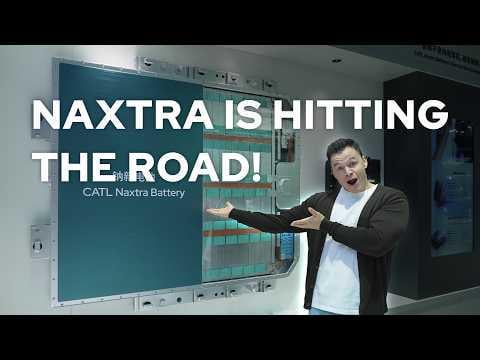
This video introduces Naxtra, CATL’s new mass-produced sodium-ion battery technology, designed to address the limitations of traditional lithium-ion batteries and overcome performance challenges in cold environments (0:00 – 0:17).
Key takeaways regarding Naxtra:
* Sustainability & Accessibility: Sodium is vastly more abundant than lithium, reducing dependency on scarce resources and volatile supply chains (0:20 – 0:53).
* Performance Improvements: Naxtra offers a 50% increase in energy density compared to previous sodium-ion iterations, making it viable for everyday electric vehicles (0:54 – 1:07).
**Solving Production Hurdles** (1:10 – 2:37):
CATL details how they transitioned from lab-scale technology to manufacturing by solving critical industry bottlenecks:
* Moisture Sensitivity: Engineered materials to be hydrophobic, keeping moisture levels below 200 ppm to ensure long-term stability (1:17 – 1:32).
* Hard Carbon Pore Engineering: Developed atomic-scale pore engineering to prevent gas generation and improve structural density, turning the anode material from a porous structure into a stable, tile-like form (1:33 – 2:03).
* Aluminum Foil Adhesion: Implemented an in-house bipolar functional coating that acts like a high-performance adhesive to bond the anode to the foil (2:04 – 2:17).
* Sodium Deposition: Introduced a self-forming anode technology with an adaptive dynamic formation protocol to ensure even sodium metal deposition (2:18 – 2:36).
Mass production for Naxtra is scheduled for the end of the year, positioning it as a practical entry point for those considering their first electric vehicle (2:40 – 2:58).

1 Comment
#Summary: Naxtra: The World’s First Mass-Produced Sodium-ion Battery
This video introduces Naxtra, CATL’s new mass-produced sodium-ion battery technology, designed to address the limitations of traditional lithium-ion batteries and overcome performance challenges in cold environments (0:00 – 0:17).
Key takeaways regarding Naxtra:
* Sustainability & Accessibility: Sodium is vastly more abundant than lithium, reducing dependency on scarce resources and volatile supply chains (0:20 – 0:53).
* Performance Improvements: Naxtra offers a 50% increase in energy density compared to previous sodium-ion iterations, making it viable for everyday electric vehicles (0:54 – 1:07).
**Solving Production Hurdles** (1:10 – 2:37):
CATL details how they transitioned from lab-scale technology to manufacturing by solving critical industry bottlenecks:
* Moisture Sensitivity: Engineered materials to be hydrophobic, keeping moisture levels below 200 ppm to ensure long-term stability (1:17 – 1:32).
* Hard Carbon Pore Engineering: Developed atomic-scale pore engineering to prevent gas generation and improve structural density, turning the anode material from a porous structure into a stable, tile-like form (1:33 – 2:03).
* Aluminum Foil Adhesion: Implemented an in-house bipolar functional coating that acts like a high-performance adhesive to bond the anode to the foil (2:04 – 2:17).
* Sodium Deposition: Introduced a self-forming anode technology with an adaptive dynamic formation protocol to ensure even sodium metal deposition (2:18 – 2:36).
Mass production for Naxtra is scheduled for the end of the year, positioning it as a practical entry point for those considering their first electric vehicle (2:40 – 2:58).