
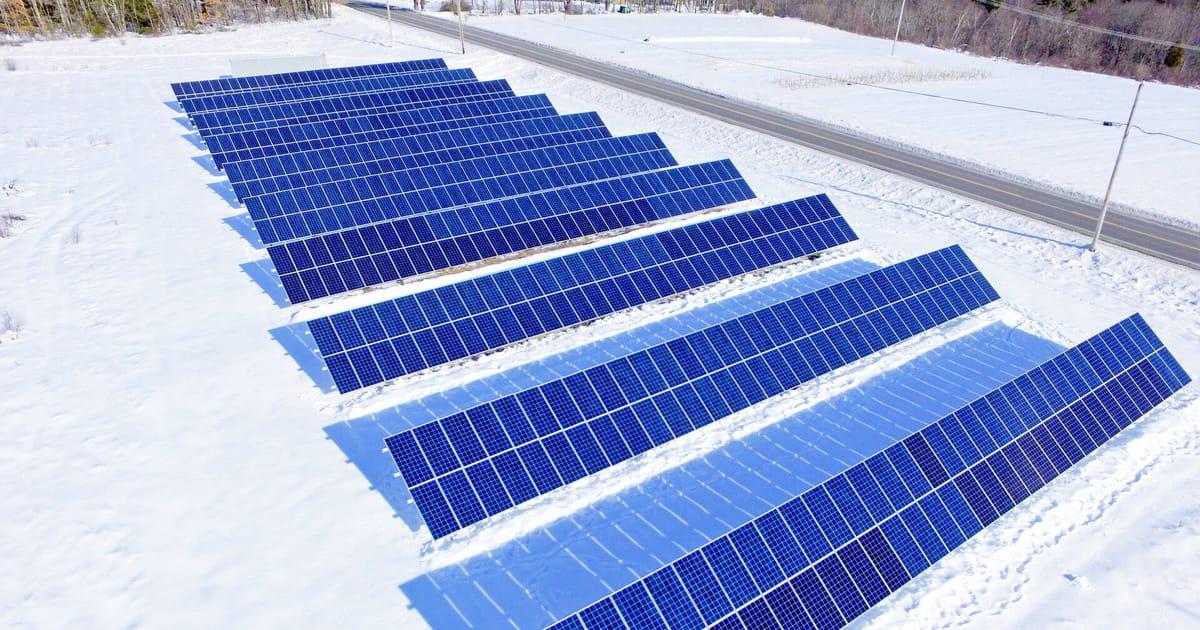
Maine’s community solar boom is going bust: Maine had more community solar capacity than any other state in 2025. But a new law enacted in the name of affordability has brought development to a standstill.
Source: Helicase21
Maine’s community solar boom is going bust: Maine had more community solar capacity than any other state in 2025. But a new law enacted in the name of affordability has brought development to a standstill.
Source: Helicase21
8 Comments
One law can kill an entire industry overnight.
Maines law is horrible as it is retroactive and is killing projects already complete.
Unsustainable subsidies dialed back in the name of affordability for non-participating ratepayers. This mouthpiece for solar industry rentseekers has the story.
What do the two laws they added do? Did they say the reasoning behind the laws? The article just says it raises taxes and cut development, but doesn’t say why they did that? If that is all, I feel like you can fight that in court.
On the other hand, if it’s just solar only, it can create too much supply and now you are going to have to fight suppliers as they will want their share. In that case, then moving towards storage would be the best next thing I would say.
Community solar owners aren’t paying their fair share to maintain the distribution and transmission system, which is vital to ensure equitable access to reliable energy. The most vulnerable communities have the least access to community solar.
For the folks who’d like to better understand the physics behind community solar projects and how they can cause burden on the system and those who receive power from them, LBL has a great overview here:
https://escholarship.org/content/qt33x8c70r/qt33x8c70r.pdf
Solar is phenomenal as a non-carbon emitting and near-zero marginal cost resource. But that doesn’t necessarily mean that “as much solar anywhere as soon as possible” is a techno-economically sound perspective.
Can they write it in a more political fashion? I think some of the readers in the back didn’t get the message about what they’re being told to think about this before the article got halfway to the paragraph where the actual law changes were mentioned.
Growing up under capitalism got me real used to the phrase ‘we can’t afford it’.