
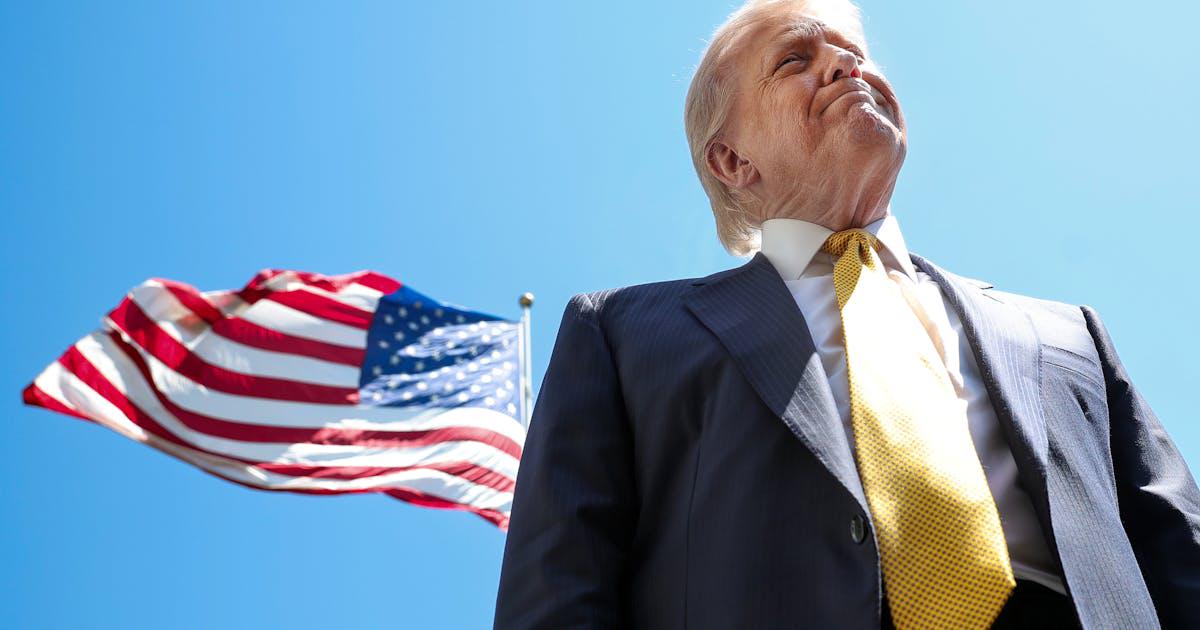
Donald Trump, Accidental Environmentalist | By driving oil prices through the roof, he’s finally giving alternative energy some badly-needed stimulus. Too bad the economic benefit goes mainly to China.
Source: thenewrepublic
Donald Trump, Accidental Environmentalist | By driving oil prices through the roof, he’s finally giving alternative energy some badly-needed stimulus. Too bad the economic benefit goes mainly to China.
Source: thenewrepublic
3 Comments
From the [article](https://newrepublic.com/article/210834/donald-trump-accidental-environmentalist-iran):
>Trump has made it unaffordable for Americans to fill their gas tanks. That’s bad. But the silver lining is that sky-high gas prices are a blessing to the environment. “Renewable Energy Is Booming Again,” says *Barron’s.* “Trump May Not Be a Fan of Clean Energy, But Iran War Is Accelerating Global Shift From Oil and Gas,” says *The Guardian.* “The Iran War Is Driving a Clean Energy Wake-Up Call,” says the climate-focused Canary Media. You can call it “The Only Good News From Iran” (David Wallace-Wells, *New York Times*), or you can call it “Donald Trump’s Green New Deal” (Tej Parikh, *Financial Times*). Parikh’s headline irritated me because that’s the one I pitched to my editor. It was already taken because the characterization is true.
>Regrettably, this clean-energy boom is happening mostly outside the United States, and especially in China, which was already cleaning our clock on renewable energy. Still, Planet Earth doesn’t care where carbon reductions originate, so long as they originate from someplace.
Ember says 5x more benefit goes to the installing country than the manufacturing country ie Europe gets the energy and installation jobs and China just gets paid for the hardware.
It’s not true that the benefit primarily goes to China.
The value of solar panels is in the energy they generate. It’s not in the manufacturing of solar panels.
Yes, China makes money manufacturing and selling solar panels. But they’re now a commodity item, which means that profit margins get sliced razor thin pretty fast.
And all (correctly) installed solar PV systems save (much) more money than they cost. So the bulk of the benefit really goes to the owner of solar panels. Not to the manufacturer.
Now, could the US be the one manufacturing commodity solar panels and making billions or trillions from that, along with all the jobs, and revenue streams for public goods, like schools? Yes. Absolutely yes. That was in the pipeline with the inflation reduction act, but the current administration and the Republican Party ended that, presumably to serve the oil and gas industry interests, as opposed to, you know, *you*, the voter.