
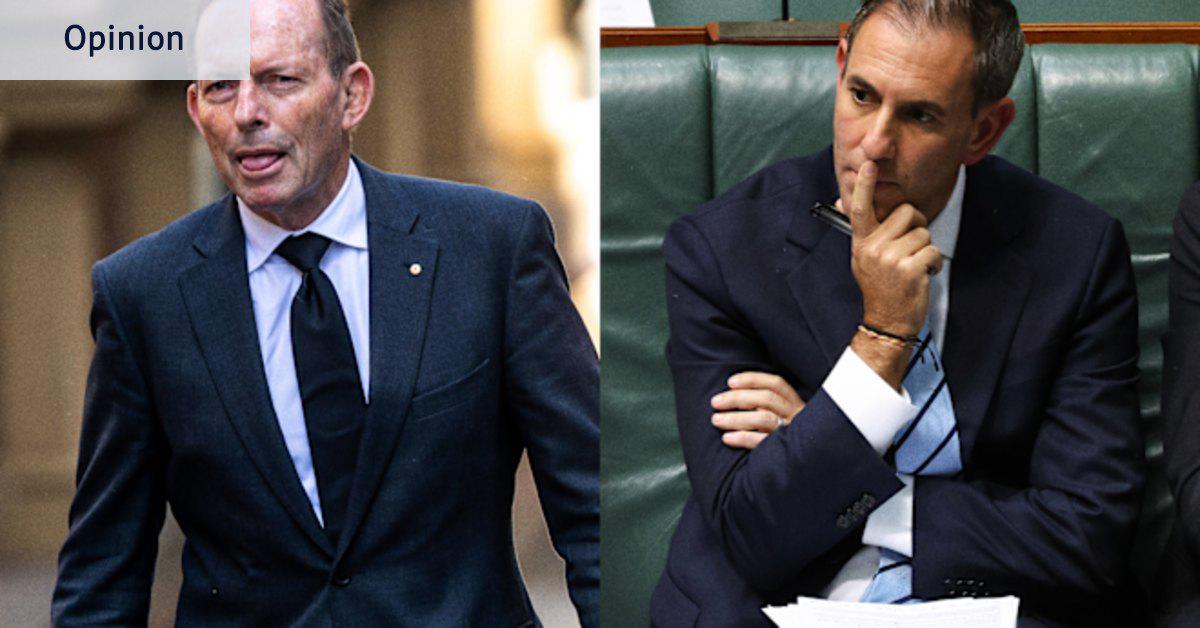
Later this week, the Liberal Party’s tribes will gather in Melbourne for its federal council. The Liberal national conference is usually a low-key affair. One of the biggest differences between the Liberal Party and the ALP is a structural one: unlike Labor, the Liberal organisational wing does not have the power to bind the parliamentary party.
A Labor conference is typically an important political event because its decisions can direct the course of governments. But for the Liberal Party the independence of the parliamentary wing from external control is an article of faith; Liberal conferences are, therefore, relatively tame affairs, seldom attracting notice other than the leader’s keynote speech.
This year, however, promises to be different. Political commentators seem incapable of writing a paragraph about the Liberal Party that does not contain the cliche “existential threat”. The seemingly relentless rise of One Nation, evidenced by the Farrer byelection and a string of awful opinion polls, will be on everyone’s mind – not the elephant in the room but the beast looming outside the door.
Federal council will also attract an unusual amount of attention for another reason: Tony Abbott will become the party’s federal president. It would be wrong to describe this as Abbott’s “re-emergence”; ever since he lost the leadership to Malcolm Turnbull 11 years ago he has continued to play an influential role in party affairs, particularly in NSW. Meanwhile, he has maintained a high public profile, most recently through his history of Australia – the most substantial scholarly work ever written by a former Liberal prime minister – and as an A-list celebrity on the international conservative conference circuit. But this will be his first frontline political role since he was PM.
While some Liberal moderates are reported to be alarmed at Abbott’s return, I am not. As I well remember from the years of the Rudd and Gillard government (when I served as a member of his leadership group), Abbott was the most effective opposition politician Australia has ever seen. In the space of just nine months, after he became the leader in December 2009, he claimed the scalp of Kevin Rudd and drove Julia Gillard into minority government – the only time a government has failed to win a majority after just one term.
He did that not just through the relentlessness and focus of his political onslaught but by giving the Liberal Party hope. Abbott persuaded a jaded party that a long-term Labor government was not an inevitability (as, before he became leader, it had seemed to be); that no matter how big Rudd’s majority, the next election was winnable. In politics, as in sport, few things make a bigger difference between success and failure than the morale of the team. Abbott rebuilt that morale in a matter of months and cast defeatism to the winds.
Abbott’s presence will also send a message to conservative voters flirting with One Nation, to keep the Liberal faith. At the next election, they will have to decide what is more important to them: showing their frustration with the status quo by voting for Pauline Hanson, or seeing Labor defeated. Voting One Nation helps Labor to win.
But Abbott is not the opposition leader. His role as chief of the party organisation raises a question on the mind of many Liberals: will he be a distraction, drawing attention from Angus Taylor? Yet his return has Taylor’s strong endorsement. There is nobody in Liberal politics, not presently in parliament, with a greater capacity to re-energise the party faithful, now so dejected by defeat everywhere except in Queensland. Abbott’s return may be a high-risk/high-reward proposition, but to overcome its current malaise, the Liberal Party needs to take a few risks. If Abbott succeeds in reviving the organisation, that will strengthen Taylor’s position, not diminish it.
Meanwhile, in the midst of the Liberal Party’s despair, an unlikely saviour has emerged: Jim Chalmers. Three days after Farrer, when Liberal spirits could hardly have been lower, the treasurer, like a kindly fairy godmother, presented Angus Taylor with the greatest political gift he could possibly have hoped for.
Scorn for the Liberal Party’s recent performance – whether from enemies or candid friends – has taken the form of two main criticisms: “We don’t know what you stand for” and “You’re a divided rabble”.
Chalmers’ budget defined the Albanese government. By creating a clear contrast between the government and the opposition, he gave the Liberal Party the sharp point of difference it so desperately needed. And not just a small difference – two profoundly different visions of Australia’s future. It sets up the next election as an ideological contest, the likes of which we have not seen since 1949 when Robert Menzies, championing optimism and free enterprise, defeated the weary socialist Ben Chifley.
Taylor’s budget reply speech could have been given by John Howard of Peter Costello, steeped as it was in the Liberal Party’s core values: free enterprise, limited government, lower taxes, the spirit of the entrepreneur, the freedom of the individual. So much that had seemed lost in the political fog of the Liberal Party’s confused recent past suddenly became clear as Taylor reconnected his party to its historic strengths, gave his followers a vision to unite around and reminded Australians what liberalism means.
Tony Abbott and Jim Chalmers are an unlikely pair of saviours for the Liberal Party. But, as even his fiercest critics admit, Abbott is a fighter. He is in lockstep with Angus Taylor, his fellow Rhodes scholar and no mean political warrior himself. And Jim Chalmers just gave them something to fight for.
George Brandis is a former high commissioner to the UK, and a former Liberal senator and federal attorney-general. He is a professor at ANU’s National Security College.
Source: Nyarlathotep-1
5 Comments
Jesus Christ the fallout from the budget is not going to unseat Labor when the Liberals have offered no alternatives. The only way the party is going to be saved is if they start acting like a proper opposition that is in touch with the people
Ah yes, some level headed and unbiased analysis from … A 2 decade liberal senator.
Honestly, do people really give a shit what former politicians have to say about day to day political issues? Particularly when they are just parroting the party line?
Till I saw the byline at the bottom, I didn’t have the slightest clue what had possessed the SMH.
They’re cowards for turning the comments section off on this
I’m willing to agree that in theory the budget did actually give the Liberal Party a lane of its own and somewhere to fight on turf friendly to it. The Liberals could have stuck to traditional Liberal economic orthodoxy like support for lower taxes, for what they define as “aspiration” and support for business which is their mainstay, and one where they aren’t having to prove themselves with regards to One Nation or Labor.
They had a chance to shut up about divisive culture war crap or immigration, which is a doubled edged sword, which alienates a lot of voters who otherwise might be receptive and also does nothing to win back One Nation voters who see One Nation as the full strength version and the Liberals as the low carb, low sugar, low fat version and the Liberals echoing ON talking points as confirmation that ON were right to begin with.
Taylor screeched about immigration, and alienated a lot of migrant voters many of whom unironically would not have been fond of the changes in the budget and perhaps willing to give a 2010s like Liberal Party a fair hearing, but not one where Taylor rants about “mass immigration” or one where Jacinta Price seems to agree with some boofhead on a podcast about how migrants are flooding in. Teal voters aren’t Labor voters so it might have been harder to reach them, but they wouldn’t be too fond of the budget either, and willing to hear the Liberals out on economic issues, but not if they double down on culture war issues.
As for Tony Abbott, I wouldn’t credit him for scalping Rudd in 2010, that was all the Labor Party. Abbott was a brutal opposition leader, but he unlike Taylor does not have to deal with a surging One Nation, he had a very friendly media ecosystem, who were more influential then than now, and he had a minority government led by Gillard, who was genuinely hated way more than Albo or ScoMo or Turnbull was, and who was never seen as a legitimate Prime Minister, rather one who backstabbed her way in, and never won a majority on her own right. None of those conditions exist for Angus Taylor in 2026. In theory Abbott might be able to persuade conservatives to keep faith with the Liberals, but a party president is still not an overtly influential figure.
I agree with the underlying thought behind what Brandis is trying to say, but I think there’s a bit of wishful thinking on his part about how Taylor responded. Even the polls showing Labor losing support, does not show the Liberals picking this up.