Prime Minister Mark Carney said Canada has entered into negotiations to buy Swedish-made Saab early-warning aircraft technology, picking a non-U.S. supplier as he makes good on a promise to reduce spending on American military gear.
Mr. Carney announced the selection at the annual CANSEC defence trade show in Ottawa Wednesday.
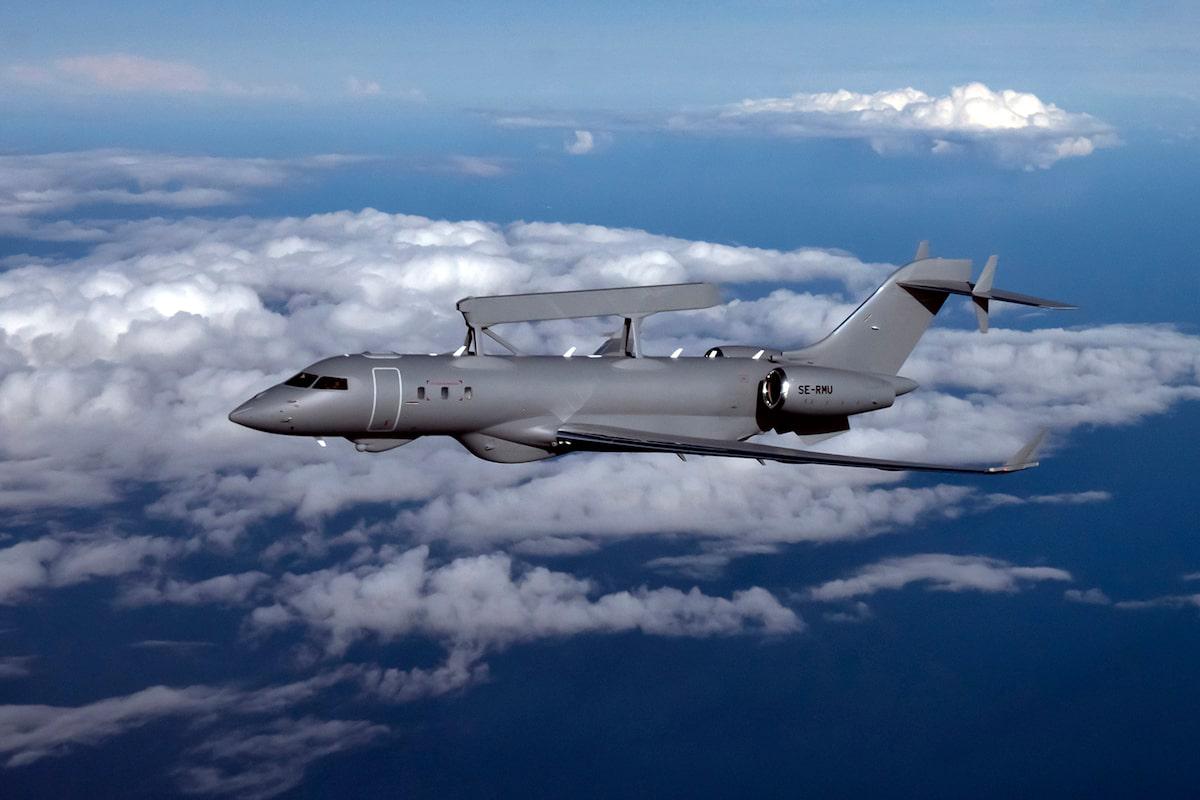
He said Canada will proceed with the Swedish GlobalEye system, made by Saab. Other contenders were the Aeris X by L3Harris and the E-7 Wedgetail by Boeing.
The GlobalEye early-warning system will be installed on Global 6500 jets made by Bombardier in Canada.
Mr. Carney told the CANSEC audience this was the first time a prime minister had spoken at the annual trade show, saying the assumptions that have defined decades of Canadian defence policy have been overturned.
The United States has grown more protectionist and unpredictable under President Donald Trump, forcing Canada to grow more self reliant.
Airborne Early Warning and Control (AEW&C) aircraft, often referred to as flying radars, are needed to track incoming threats in an era where Canada is worried about hypersonic and cruise missiles from countries such as Russia and China.
“Saab and Bombardier’s expertise is transforming a modern jet into a cutting-edge surveillance aircraft,” Mr. Carney said in his speech.
“With a suite of advanced sensors and mission systems, Saab’s GlobalEye will be a key resource for the Canadian Armed Forces to detect and deter threats across the Arctic.”
Mr. Carney has repeatedly promised to reduce Canada’s spending on U.S.-made military gear. “The days of our military sending 70 cents of every dollar to the United States are over,” he said most recently at the Liberal Party’s convention in April.
He noted the Saab technology is also the product of choice for Canadian partners, including France, Sweden and the UAE.
While the Bombardier 6500 aircraft are built in Canada, the Prime Minister acknowledged they have about 20 per cent U.S. content.
As part of the Saab deal, Canada will build Bombardier 6500 jets for early-warning and control air aircraft orders from other countries, Mr. Carney said. This will support more than 3,000 jobs in Canada’s aerospace sector, he said.
At least one-third of the planned GlobalEye aircraft fleet will be produced in Canada over the next 15 years, he said. This represents at least 40 aircraft, including export orders for other countries, built by Canadian workers.
GlobalEye’s airborne surveillance capability can track objects and signals up to 650 kilometres away, and will share real-time information to the Canadian Armed Forces, Mr. Carney said.
More than three months after the federal government announced its Defence Industrial Strategy, Mr. Carney provided several updates on Wednesday to promises made in the document, including changes to Canada’s Industrial and Technological Benefits (ITB) policy.
The policy, meant to ensure that companies awarded contracts by the federal government are investing equal amounts into Canadian industry, has long been lamented by industry for its inefficiencies.
To improve upon this, Mr. Carney said his government is launching an entirely new ITB policy that includes a 90-day approval standard for companies and a crediting system for high worth investments, such as building or expanding a facility, funding research and development, or transferring intellectual property to a Canadian company.
Canadian companies doing at least 70 per cent of their work domestically will also now be credited as if they’re doing 100 per cent, to incentivize companies already in Canada to stay.
His government has boosted defence spending quickly in what experts have said is the largest short-term injection since the Korean War. Mr. Carney’s November, 2025 budget announced more than $80-billion over five years with commitments to spend even more to meet at new NATO commitment to spend 3.5 per cent of Canada’s Gross Domestic Product on the military.
Mr. Carney also outlined the framework that will enable his government to work with specific Canadian companies as industry “champions,” as was outlined in the Defence Industrial Strategy. These champions will receive specialized information about operational priorities to help with procurement, as well as benefits for investing back into the Canadian supply chain. He did not say who these strategic partners are or when they will be chosen.
A concierge service, promised in the defence strategy, was fleshed out by Carney to help guide small and medium-sized businesses looking to enter the defence sector, connecting them to programs, provincial partners, and export opportunities. Specialized staff will also be integrated into industry associations.
Finally, Mr. Carney provided more clarity on the Defence Advisory Forum promised in the strategy to better connect government and industry. It will be made up of senior industry executives from the 10 sovereign capability areas outlined in the strategy, including autonomous systems, space, sensors and aerospace, to name a few.
The forum will be co-chaired by Minister of National Defence David McGuinty, Minister of Industry Melanie Joly, Secretary of State for Defence Procurement Stephen Fuhr, and industry members.
Little-Chemical5006 on
Personally love to see it.
a_sense_of_contrast on
A great day for Canada, and therefore the world.
Old_General_6741 on
Love to see it. Going to the Swedes and not the Americans.
Artistic_Concern_33 on
I mean did he really have a choice, the Saab jet is based on bombardier which is built in Canada, going for Boeing would have made zero sense
scanthethread2 on
Prepare for tantrums
Everywhereslugs on
Win-win. We get new decent aircraft and Trump and his “buy US defence products only” gets a big, black eye.
Sufficient-Tutor-922 on
CPC is getting dragged into deep water. Its actually wild to see .
Carneys ability to identify the window of opportunity to use the surge of patriotic support to massively boast defense spending was wild .
This is short term , midterm ecconomic based with long term defense goals .
It was the fastest way to jam a needle into our ecconomy and he is very much succeeding in execution.
You can hate Carney or not but to be frank the defense spending increase and what hes doing with it is absolutely brilliant in a number of ways.
Vortagaun on
Now cancel whatever F35s we haven’t paid for, buy Gripens as a stopgap until the GCAP fighter is in production, select the Hanwha Korean subs.
Then continue development with Ukraine on cheap advanced drone technology. Its great to have a PM in office who gets stuff done.
Acceptable_Visit_115 on
SAAB electronics on Bombardier jets. You’d love to see it.

11 Comments
Full text
—
Prime Minister Mark Carney said Canada has entered into negotiations to buy Swedish-made Saab early-warning aircraft technology, picking a non-U.S. supplier as he makes good on a promise to reduce spending on American military gear.
Mr. Carney announced the selection at the annual CANSEC defence trade show in Ottawa Wednesday.
He said Canada will proceed with the Swedish GlobalEye system, made by Saab. Other contenders were the Aeris X by L3Harris and the E-7 Wedgetail by Boeing.
The GlobalEye early-warning system will be installed on Global 6500 jets made by Bombardier in Canada.
Mr. Carney told the CANSEC audience this was the first time a prime minister had spoken at the annual trade show, saying the assumptions that have defined decades of Canadian defence policy have been overturned.
The United States has grown more protectionist and unpredictable under President Donald Trump, forcing Canada to grow more self reliant.
Airborne Early Warning and Control (AEW&C) aircraft, often referred to as flying radars, are needed to track incoming threats in an era where Canada is worried about hypersonic and cruise missiles from countries such as Russia and China.
“Saab and Bombardier’s expertise is transforming a modern jet into a cutting-edge surveillance aircraft,” Mr. Carney said in his speech.
“With a suite of advanced sensors and mission systems, Saab’s GlobalEye will be a key resource for the Canadian Armed Forces to detect and deter threats across the Arctic.”
Mr. Carney has repeatedly promised to reduce Canada’s spending on U.S.-made military gear. “The days of our military sending 70 cents of every dollar to the United States are over,” he said most recently at the Liberal Party’s convention in April.
He noted the Saab technology is also the product of choice for Canadian partners, including France, Sweden and the UAE.
While the Bombardier 6500 aircraft are built in Canada, the Prime Minister acknowledged they have about 20 per cent U.S. content.
As part of the Saab deal, Canada will build Bombardier 6500 jets for early-warning and control air aircraft orders from other countries, Mr. Carney said. This will support more than 3,000 jobs in Canada’s aerospace sector, he said.
At least one-third of the planned GlobalEye aircraft fleet will be produced in Canada over the next 15 years, he said. This represents at least 40 aircraft, including export orders for other countries, built by Canadian workers.
GlobalEye’s airborne surveillance capability can track objects and signals up to 650 kilometres away, and will share real-time information to the Canadian Armed Forces, Mr. Carney said.
More than three months after the federal government announced its Defence Industrial Strategy, Mr. Carney provided several updates on Wednesday to promises made in the document, including changes to Canada’s Industrial and Technological Benefits (ITB) policy.
The policy, meant to ensure that companies awarded contracts by the federal government are investing equal amounts into Canadian industry, has long been lamented by industry for its inefficiencies.
To improve upon this, Mr. Carney said his government is launching an entirely new ITB policy that includes a 90-day approval standard for companies and a crediting system for high worth investments, such as building or expanding a facility, funding research and development, or transferring intellectual property to a Canadian company.
Canadian companies doing at least 70 per cent of their work domestically will also now be credited as if they’re doing 100 per cent, to incentivize companies already in Canada to stay.
His government has boosted defence spending quickly in what experts have said is the largest short-term injection since the Korean War. Mr. Carney’s November, 2025 budget announced more than $80-billion over five years with commitments to spend even more to meet at new NATO commitment to spend 3.5 per cent of Canada’s Gross Domestic Product on the military.
Mr. Carney also outlined the framework that will enable his government to work with specific Canadian companies as industry “champions,” as was outlined in the Defence Industrial Strategy. These champions will receive specialized information about operational priorities to help with procurement, as well as benefits for investing back into the Canadian supply chain. He did not say who these strategic partners are or when they will be chosen.
A concierge service, promised in the defence strategy, was fleshed out by Carney to help guide small and medium-sized businesses looking to enter the defence sector, connecting them to programs, provincial partners, and export opportunities. Specialized staff will also be integrated into industry associations.
Finally, Mr. Carney provided more clarity on the Defence Advisory Forum promised in the strategy to better connect government and industry. It will be made up of senior industry executives from the 10 sovereign capability areas outlined in the strategy, including autonomous systems, space, sensors and aerospace, to name a few.
The forum will be co-chaired by Minister of National Defence David McGuinty, Minister of Industry Melanie Joly, Secretary of State for Defence Procurement Stephen Fuhr, and industry members.
Personally love to see it.
A great day for Canada, and therefore the world.
Love to see it. Going to the Swedes and not the Americans.
I mean did he really have a choice, the Saab jet is based on bombardier which is built in Canada, going for Boeing would have made zero sense
Prepare for tantrums
Win-win. We get new decent aircraft and Trump and his “buy US defence products only” gets a big, black eye.
CPC is getting dragged into deep water. Its actually wild to see .
Carneys ability to identify the window of opportunity to use the surge of patriotic support to massively boast defense spending was wild .
This is short term , midterm ecconomic based with long term defense goals .
It was the fastest way to jam a needle into our ecconomy and he is very much succeeding in execution.
You can hate Carney or not but to be frank the defense spending increase and what hes doing with it is absolutely brilliant in a number of ways.
Now cancel whatever F35s we haven’t paid for, buy Gripens as a stopgap until the GCAP fighter is in production, select the Hanwha Korean subs.
Then continue development with Ukraine on cheap advanced drone technology. Its great to have a PM in office who gets stuff done.
SAAB electronics on Bombardier jets. You’d love to see it.
The Erieye radar (mounted on a SAAB 2000) has most recently seen [live aerial combat on May 7th, 2025](https://en.wikipedia.org/wiki/2025_India%E2%80%93Pakistan_conflict#Aerial_skirmishes) with the Pakistani AF against India. So it’s not some unproven indie product from nowhere.
And the Globaleye will feature the upgraded Erieye-ER radar.
We didn’t get a good enough deal here.
Carney should have asked that Sweden send the Viagra Boys and the Hives to Canada, while they get Nickelback as part of the package.